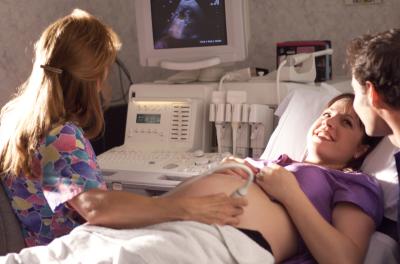
Although it would be ideal to let your little one choose when she is ready to enter the world, circumstances arise that require an induction. Many physicians prefer to wait until 41 or 42 weeks to induce labor, even if a baby’s lungs are typically mature enough for the child to be born earlier, states Dr. Draion Burch, Pennsylvania-based obstetrician-gynecologist. It can be beneficial, though, for you to opt for an induction versus waiting for your baby to make his entrance on her own.
RELATED: Inducing Labor
Risk to Your Baby
Convenience
Although most inductions are performed as medical necessities, in rare cases, a mother may be induced after 39 weeks for convenience, says Brueggmann. “Although it is rare, a doctor may approve an induction if the mother is living in a remote area far away from any medical care to ensure she can make it to the hospital versus waiting for a spontaneous labor,” she says.
Reduced Maternal Complications
Inducing labor after 37 weeks can reduce the risk of infant mortality without increasing complications to the mother or the need for a cesarean birth, according to findings from a study by researchers in Scotland published in May 2012 in the “British Medical Journal.” The study also found that electing to induce did result in more admissions to a special care unit for newborns born at 40 weeks’ gestation.
RELATED: Natural Ways to Induce Labor
Prolonged Pregnancy Risks
It can be beneficial for both the mother and baby to induce labor if the pregnancy is prolonged beyond 42 weeks and the baby’s supply of nutrients from the placenta is waning, according to the American Pregnancy Association. When labor is induced, mothers should still push at their own pace and participate in relaxation techniques, as induction does not guarantee a shorter labor and delivery time.
Photo via Photodisc/Photodisc/Getty Images