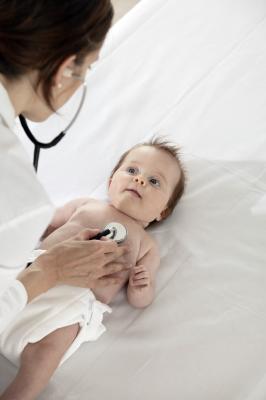
Your baby’s weight is one of the primary markers of his overall health. According to the American Pregnancy Association, healthy babies will gain about 5 to 7 ounces per week for the first few months of their lives and most will have doubled their weight by the time they reach the 3- to 4-month mark. As your baby inches toward his first birthday, you’ll want to keep an eye on his weight gain – or loss – as an indicator of his well-being.
RELATED: Your Guide to Baby's Weight Gain
Schedule Regular Checkups
Make Sure She's Satisfied
Your baby’s food intake will also help you monitor her growth. After your baby eats, watch for signs of satisfaction. Typically, your baby will let you know if she’s full or if she wants more, according to the American Academy of Pediatrics. At each feeding, you’ll learn to recognize your baby’s cues. If she moves away from the nipple or dozes off, she’s likely full. On the other hand, if she keeps smacking her lips or starts to fuss, she likely wants more. By the end of her first month of life, she should be drinking about 4 ounces of formula; by six months, that number will rise to 6 to 8 ounces.
Recognize Signs of Failing to Thrive
The importance of tracking your baby’s weight gain cannot be underestimated. Children who are not gaining weight at a normal pace can be diagnosed with “failure to thrive,” a condition in which a baby’s height, weight and head circumference don’t follow standard growth charts. Failure to thrive can result in significant physical, emotional and mental developmental delays. If you have any concerns that your baby isn’t growing at a typical rate, consult your pediatrician.
Photo via Comstock Images/Stockbyte/Getty Images