
What to Know
It’s something incredibly stressful and life-changing that a lot of parents have shied away from talking about for some time — perhaps because we didn’t quite have the language for it or because the sheer weight of it all was extremely difficult to fully express. Being a part of the sandwich generation, which is caring for an aging parent all while raising children under the age of 18, is truly not for the faint of heart.
The Hills reality TV star and influencer, Whitney Port, recently shared a full gamut of emotions on her podcast, With Whit, about how she’s been experiencing a troubling time while caring for her mother who has been experiencing cognitive decline over the last couple of years and needs to be within the care of a trusted adult because she can no longer be on her own. If any of this sounds at all familiar, keep reading, because you are not alone.
It’s so hard when you have to make difficult decisions about your parent’s care.
On a recent episode of her podcast, With Whit, the former hit MTV reality television star, Whitney Port, found herself getting emotional when she opened up about caring for her aging mother who is experiencing cognitive decline.
Whitney was chatting with Jill McNamara, who is Vice President of Senior Care at Care.com, and an expert on aging and senior care, all about being a part of the sandwich generation, and the emotional toll it can take on parents who are truly doing it all.
Whitney opened up about how she and so many people who are in a similar situation, some of which took a recent survey with Care.com, suddenly realized that they were in the position of being a caregiver to their parent without even knowing how they fully got there.
When discussing how you can start to feel invisible or unseen by those in your life who have no idea what you’re really going through, Whitney broke down.
“Like, right now I feel like I’m in a state of grief where I’m still trying to figure out her care plan. Things are evolving day-to-day and I’m in this middle position where I’m like, grieving the life that I once had with my parents while also watching my mom decline,” Whitney said through tears.
It’s hard to know what’s best and what route to take when it comes to aging parents & the care they need.
Whitney also shared that they’re going through a “hard time right now” because they’re looking at her mom’s care and the plan surrounding that and trying to figure out “what’s best for her.”
She also discussed how things haven’t always been linear and there’s been different iterations of care that have occurred throughout these past couple of years.
“Originally when we had care for her, she was very, very resistant to it. I’m honestly in a pretty bad way with it at the moment. I think part of my helplessness feeling right now is because I’m not there knowing what’s going on every day. But I then think about if she were to come live with me, could I handle that? And I don’t know. And that’s where I’m at right now. Because she can’t be on her own,” Whitney said.
It’s an incredibly difficult spot to be in, especially when you already have a full plate in terms of your career and caring for your own children. It feels like you’re running a marathon that’s filled with sadness and grief, and hopefully some bright spots along the way as well.
Whitney has discussed how having these difficult conversations with your aging parent can be hard but you can still lead with love.
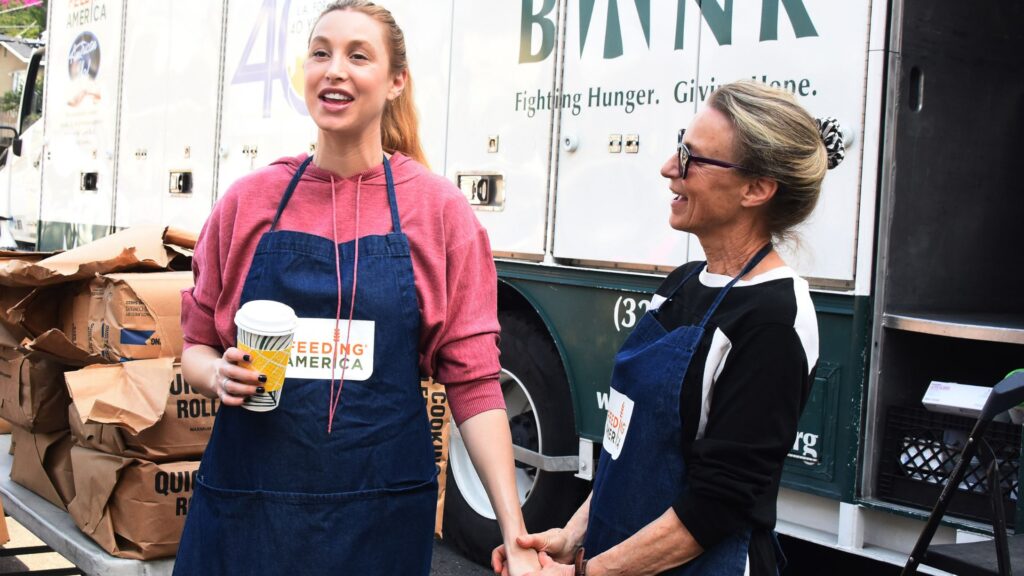
In December 2025, Whitney spoke to Health.com about being a part of the sandwich generation and what it looked like having an open and productive conversation with her mother about her transitioning to needing care at home.
Whitney shared that sometime in 2024, her and her siblings started to notice changes in their mother’s behavior, whether it be “forgotten details” or “repeated stories.” When Whitney and her siblings started to notice “how much harder everyday tasks were becoming for her and how much energy it took all of us to help her stay organized and safe,” they knew that they needed to sit down and have a difficult conversation.
While Whitney shared that it was emotional, they were “gentle and honest,” and most importantly, they all “led with love.” “Instead of saying ‘you need help,’ we tried to say things like, ‘we want you to feel supported, and we want to enjoy our time together instead of always problem-solving,” Whitney shared with Health.com.
If this is sounding similar to your story when it comes to providing care for your aging parent, perhaps it’s time to do a little check-in with yourself, siblings, or your partner to really see where you’re at emotionally and what supports you may need to set up to make being a part of the sandwich generation a more seamless ride.
READ NEXT: Tim McGraw & Faith Hill’s Daughter Gracie Opens Up About the ‘Worst Thing’ She’s Done to Herself