You’re 13 weeks pregnant!
What does 13 weeks equal in months?
At 13 weeks pregnant, you’re at the end of your first trimester of pregnancy. Since pregnancy is 40 weeks long, it’s not easily divisible by three to split into trimesters and can get confusing real quick. Each trimester is about 13 to 14 weeks long, and at 13 weeks pregnant, you’re in your first trimester. Here’s a quick primer what pregnancy weeks equal to in months in your first trimester:
- Month 3: Weeks 9 to 13
- Month 4: Weeks 14 to 17
- Month 5: Weeks 18 to 22
Your ultrasound
The American College of Obstetricians and Gynecologists (ACOG) recommends pregnant women get at least one ultrasound at 18 to 22 weeks to check on the health and development of the fetus. Some patients also get an ultrasound in their first trimester to estimate gestational age, count the number of fetuses, screen for certain genetic disorders, and check for fetal heartbeat and possible ectopic pregnancy.
Your pregnant belly at 13 weeks
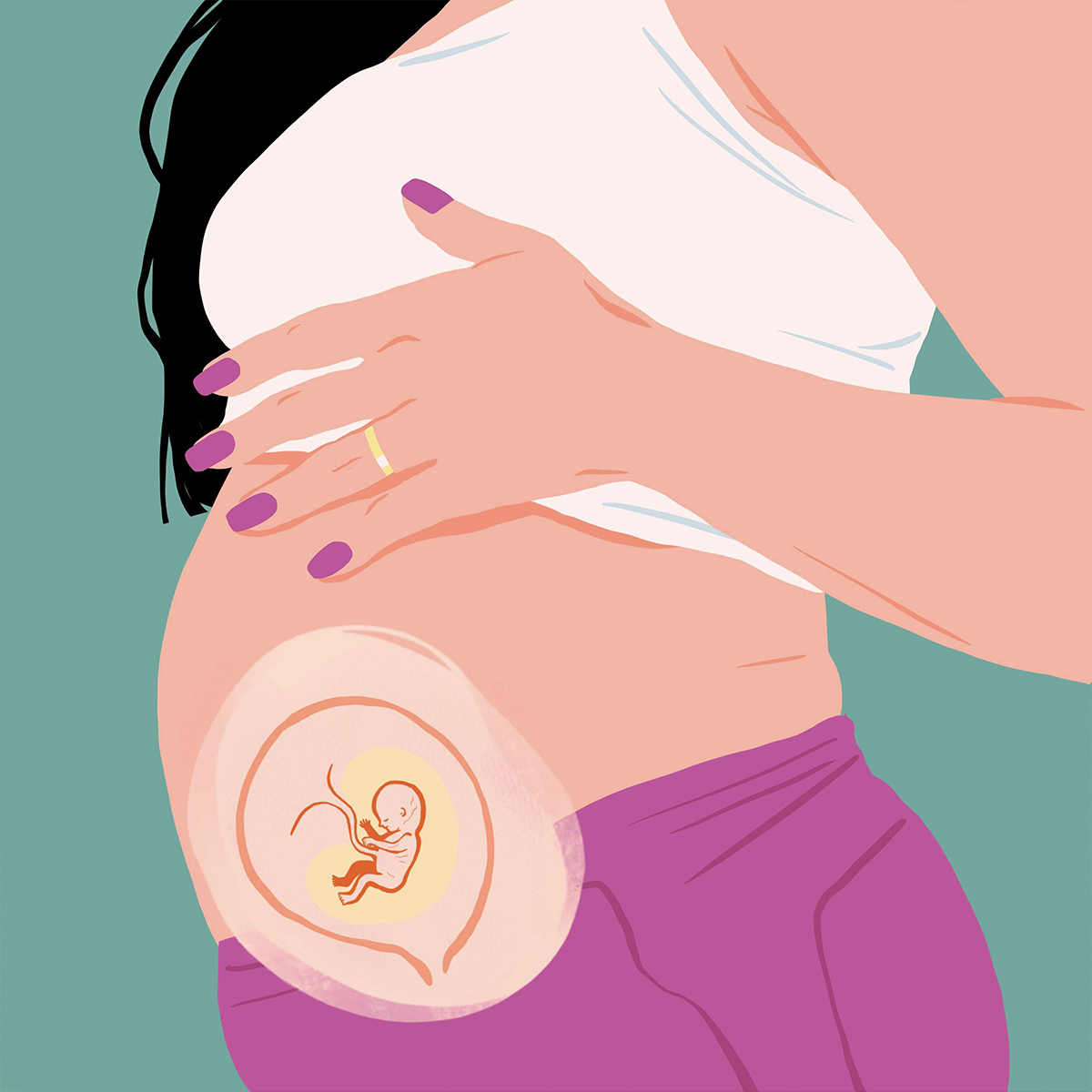
At 13 weeks pregnant, your fetus is about the size of lipstick and their head is about half the size of their body measured from crown-to-rump. Don’t worry though — by the time you give birth, their head will be at the more expected baby size of 3/4 their total size.
Tiny bones are now developing around your baby’s head, arms and legs and they might even have started to be able to move around. Soon, your fetus will be able to suck their thumb! Though their intestines thus far have been growing in the umbilical cord, they are now migrating to their abdomen permanently. The placenta is also increasing in size and in addition, the fetal vocal cords are developing — though you won’t be able to hear them use it. Your baby is also swallowing amniotic fluid and peeing and producing meconium — the sticky, tar like poop they pass in their first poopy diaper.
Pregnancy tips at 13 weeks
Now that the second trimester is around the corner, you may
Take your vitamins
You may be tempted to stop taking your prenatal vitamins and supplements — sometimes, because they can often be huge and difficult to swallow — or cause nausea. You can ask your OB/GYN to prescribe prenatal vitamins or supplements that are easier on the stomach.
Stay healthy
While that sounds really non-specific, pregnant women are more prone to getting sick because during pregnancy, your body suppresses your immune system so that you won’t reject the fetus you’re carrying. Thus, make sure you actively implement non-pharmaceutical interventions like social distancing, mask-wearing, and hand-washing.
Your pregnancy checklist at 13 weeks
By the second trimester, you will be seeing your OB-GYN every four weeks — and those will definitely fill up fast! If you haven’t scheduled these visits yet, make sure you get those appointments on the books. Some other things you may want to put on your 13 week pregnant checklist include:
- Eat enough calories to feed and nourish your growing baby — especially if you’re carrying multiples or have underlying medical conditions. Ask your medical provider for what would be best for your health.
- Stay active to keep up your health — by 13 weeks, you will likely need to avoid abdominal exercises that require you to be on your back such as sit ups.
What are you eating for you and your baby?
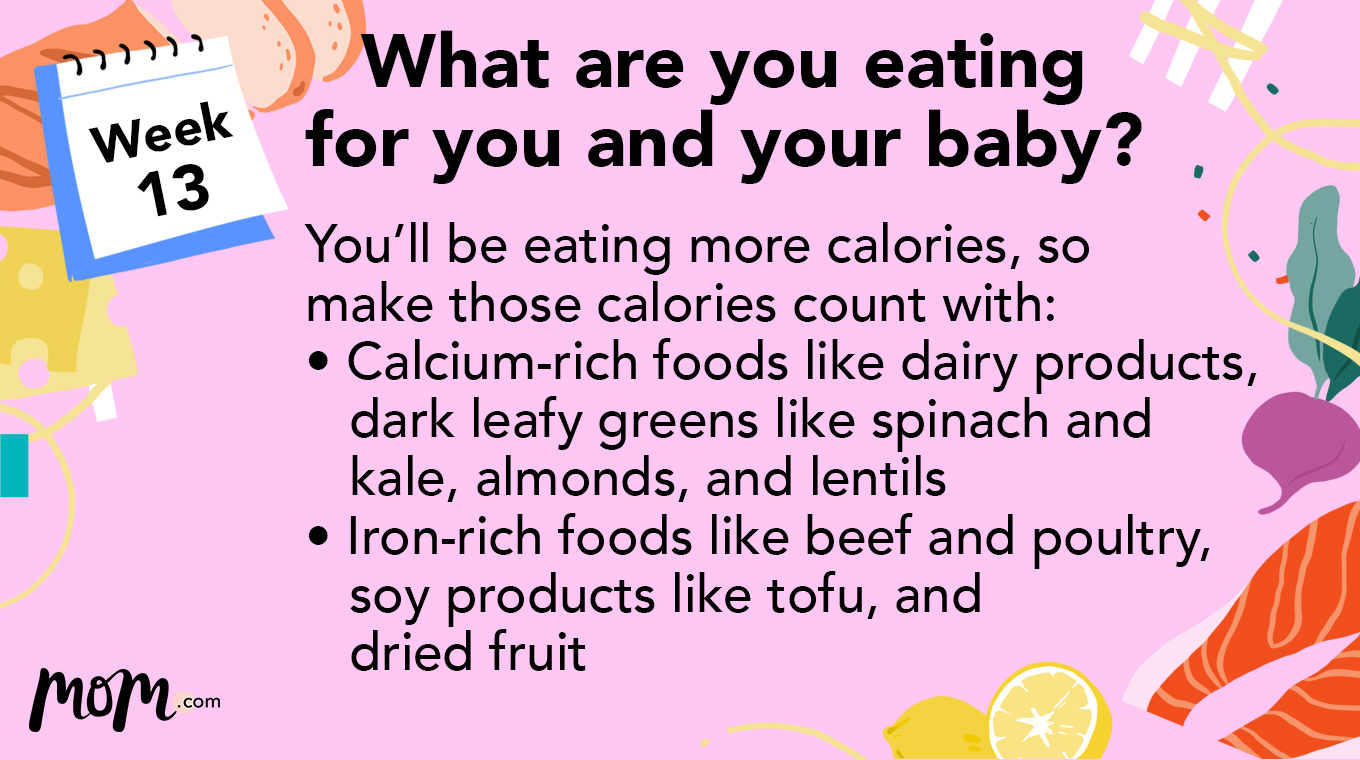
Not only should you be eating more calories, you will need to make those calories count. Ensure a healthy diet for yourself at 13 weeks pregnant by filling yourself with high in nutrient foods and additional supplements and vitamins. Consider emphasizing the following foods and nutrients:
Calcium
Continuing eating calcium rich foods such as dairy products, dark leafy greens like spinach and kale, almonds, and lentils. Make sure to pair with foods containing Vitamin D to help your body absorb the calcium. Try foods such as salmon, egg yolks, and herring or sardines.
Iron
Due to increased blood volume in your body, you will need more iron in your diet. You can try slow-release pills which cause less constipation, and iron-rich foods like beef, poultry, soy products like tofu, and dried fruit.
In addition, try to avoid or restrict the following foods:
- Caffeine, alcohol, and drugs
- Undercooked meats
- Unheated lunch meats
- Unpasteurized foods (e.g.: soft cheeses)
- Unwashed fruits and vegetables
- High mercury seafoods
- Raw seafood (e.g.: sushi)
- Raw eggs