You’re 6 weeks pregnant!
What does 6 weeks equal in months?
At 6 weeks pregnant, you’re in your second month of pregnancy. Since pregnancy is 40 weeks long and is not easily divisible by three, the weeks don’t slot neatly into 4-week months. Each trimester is about 13 to 14 weeks long, and at 6 weeks pregnant, you’re in your first trimester. Here’s a quick primer what pregnancy weeks equal to in months around 6 weeks:
-
Month 2: Weeks 5 to 8
-
Month 3: Weeks 9 to 13
-
Month 4: Weeks 14 to 17
Your ultrasound
At 6 weeks gestation, it is generally the earliest your doctor will conduct an ultrasound to confirm pregnancy. Because the fetus is often too small to see on a standard ultrasound your medical professional will likely do a transvaginal ultrasound. It is still a little bit too early to estimate gestational age from a transvaginal ultrasound at 6 weeks, but they can check for the fetal heartbeat which is currently twice the speed of yours.
Your pregnant belly at 6 weeks
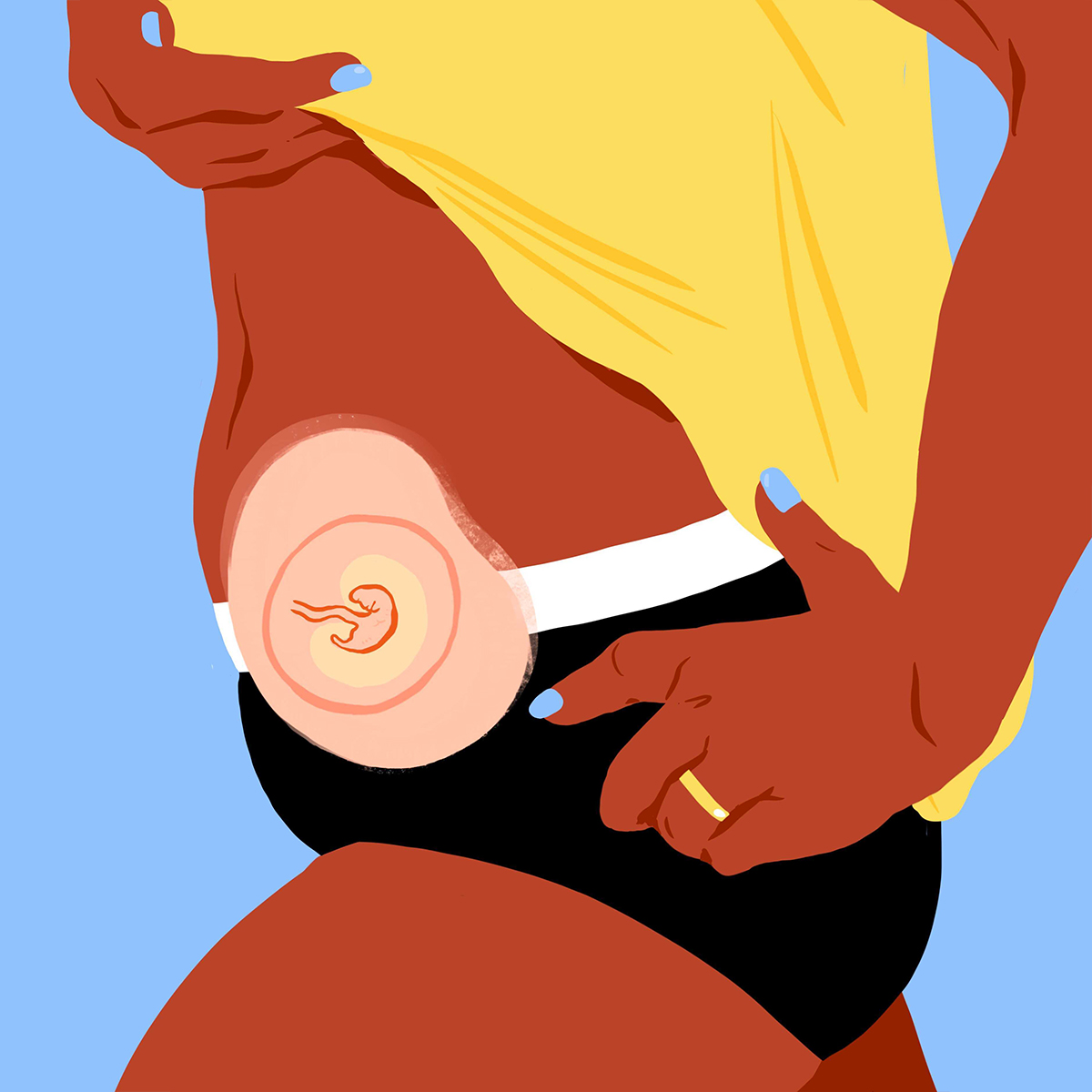
At 6 weeks pregnant, though you are likely not showing yet, your clothing might already be getting a little too tight. Loosen the top button or get those early pregnancy stretchy waist pants! You may feel some bloating or mild cramping as your uterus expands to accommodate your growing baby. Your embryo is about the size of a pea or lentil though your belly may feel achy as your uterus expands and makes room for your baby as it grows.
Your baby’s eyes and nostrils are starting to form as dark spots on the embryo and their ears are tiny depressions on either side of their head. Their tongue, and vocal cords are beginning to develop inside their mouth, and arm and leg buds that look like small paddles are forming, too. Your baby is also in the iconic fetal curl with their backbone sticking out like a tiny tail. That will disappear after a few week’s time.
Pregnancy tips at 6 weeks
At 6 weeks, you’re still at the very beginning stages of pregnancy and may be feeling super overwhelmed. Don’t worry — you have approximately 40 weeks to slowly acquire all the information you need. And even if you don’t feel fully prepared, know that there is no way to know everything. Even seasoned parents have moments of doubt and worry!
You don’t have to give up all seafood
You may want to avoid raw fish or fish high in mercury like tilefish, swordfish, or king mackerel, but you can still eat seafood if you want. Seafood is a good source of protein, iron, and zinc.
Don’t delay urinating
Unfortunately, one of the symptoms of pregnancy is frequent urination. Even if it’s annoying, don’t hold it in! As mentioned above, it’s a lot easier for pregnant people to get UTIs, so don’t delay. Pee when you need to and don’t restrict your water intake because you don’t want to pee so much.
Eat several small meals a day
If your morning sickness has already started and you feel queasy and sick, stick to several small meals a day. Try to avoid overeating or an empty stomach — both which will exacerbate your nausea.
Your pregnancy checklist at 6 weeks
Soak in the happy feelings of finding out you’re pregnant for as long as you want. You have plenty of time to tick things off a checklist — but just in case you’re a go-getter,
Make your prenatal appointment
Since you most likely just found out you are pregnant, go make that first prenatal appointment right now. These slots can fill up really quickly so get yours on the books as soon as you can.
Check your work safety
If you’re going into the office for work, make sure your workplace doesn’t expose you to hazardous chemicals, radiation, biological agents, or heavy metals like lead or mercury.
What are you eating for you and your baby?

At 6 weeks pregnant, you will need to eat foods high in folic acid, calcium, iron and protein. If you can’t get all of these nutrients from your diet, consider adding supplements and vitamins.
Folic acid
Folic acid is a B-vitamin that’s needed for neural tube, central nervous system, and brain development. Take a folic acid supplement or eat foods naturally high in folic acid like green leafy vegetables, broccoli, chickpeas or kidney beans, nuts, and oranges or strawberries.
Choline
One essential nutrient for physiological processes like producing neurotransmitters and phospholipids is choline. It helps decrease neural tube defects and helps develop the memory center of the fetal brain. Choline is in foods like meat, fish, dairy, eggs, potatoes, broccoli, nuts, seeds, and whole grains.
DHA
DHA is a healthy fat and an omega-3 fatty acid essential to helping develop your baby’s brain and eyes. You can get DHA from supplements or prenatal vitamins, or from foods like fatty, oily fish such as salmon, sardines, seaweed, dairy, or omega-3 enriched or pasture-raised eggs.
Protein
Eat approximately three servings of protein a day to ensure healthy development of tissues, antibodies, hormones, and enzymes. Try protein-rich foods like skinless chicken, lean beef, eggs, fish, dairy, nuts, or legumes.