You're 21 weeks pregnant!
What does 21 weeks equal in months?
So, how many months is 21 weeks pregnant? Right now you’re right on the cusp of being 6 months pregnant. Not only do you look pregnant, but you’re likely starting to feel pregnant as well. As your center of gravity has changed, it’s always important to be cautious going down the stairs, since your balance may likely be off these days.
Your ultrasound
An ultrasound right now might show all of the amazing development your baby is going through. A 21 week fetus is busy preparing for life outside the uterus; your baby’s digestive system is developing. You’ll be able to see the chambers of your baby’s heart as well. Depending on your background, history, and even age, your doctor may suggest a variety of tests at this stage of your pregnancy. Sometimes amniocentesis or CVS is done, other times testing can be done with your blood sample. Your doctor may check for Down syndrome, trisomy 18, or trisomy 13.
Your pregnant belly at 21 weeks
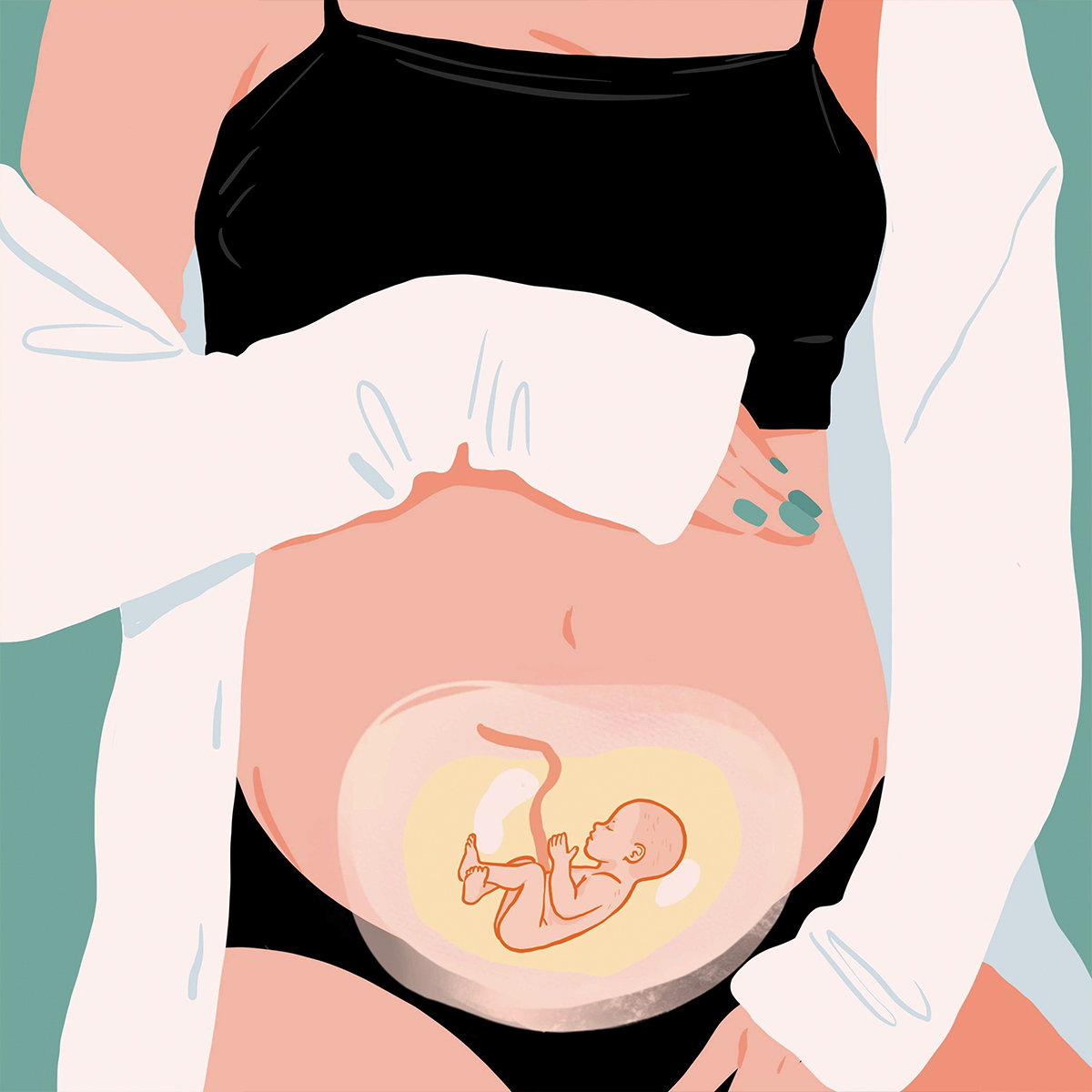
So your breasts are growing and you may notice splotchy or veiny skin on your chest as well as stretch marks both on your chest and belly. Some moms-to-be even begin to notice stretch marks and spider veins on their legs at this stage of pregnancy as well. Check with your doctor if you have concerns, compression socks may help or your doctor may suggest cutting back on salt or keeping your legs elevated when you can, to alleviate pressure.
Pregnancy tips at 21 weeks
- Keep drinking that water to keep Braxton Hicks contractions at bay and to ensure optimal health.
- You may want to consider some light exercise like yoga, swimming or walking, especially if you’re having circulation issues in your legs and feeling uncomfortable.
Your pregnancy checklist at 21 weeks
- If you haven’t already, it’s time to schedule your glucose tolerance screening. This screening will check for gestational diabetes by looking for high levels of glucose that could indicate a risk of developing gestational diabetes. It’s usually performed between week 24 and week 28.
What are you eating for you and your baby?
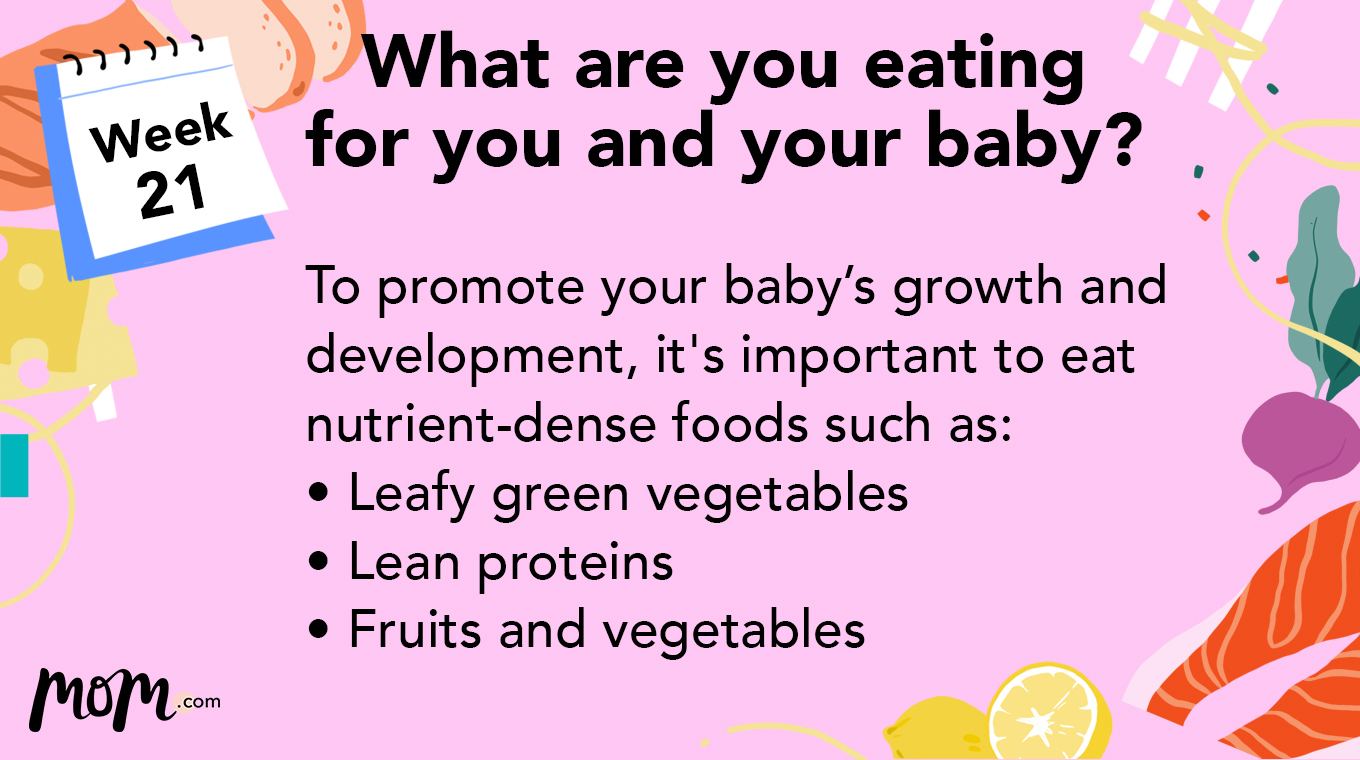
It’s important now more than ever to ensure you’re eating nutrient-dense foods. Proper nutrition can help promote your baby’s growth and development. The U.S. Department of Agriculture offers a division of the MyPlate initiative called MyPlate for Moms. The site, for pregnant and breastfeeding moms, offers information about healthy eating and offers nutritional resources for moms to be. Nutrient-dense foods include:
- Leafy green vegetables
- Lean proteins
- Fruits and vegetables