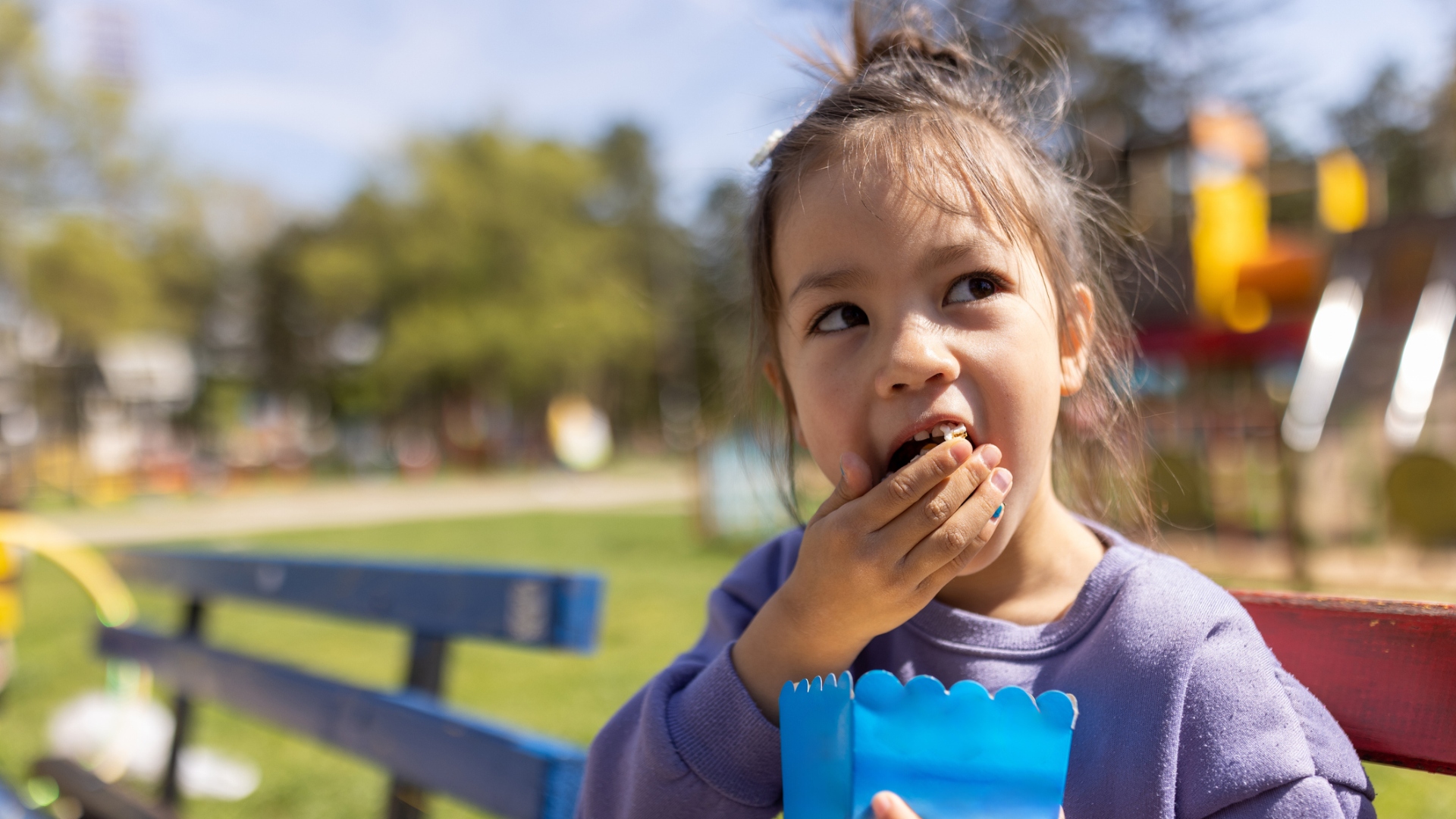
If it sometimes feels as though your child is constantly asking for food, you’re not alone. We all know that children love treats like cookies after school or a fizzy drink at a party, but what happens when those little treats start showing up every day? One cookie turns into three, and somehow, they’re still asking for more? You start to wonder — are they really hungry or is something else going on? This experience is increasingly being described as food noise: the internal conversation inside our minds that keeps prompting us to eat more. And it’s easy, as a parent, to interpret this as greed or poor self-control but in most cases, it’s more than that.
Food noise is far more psychological than we realize. Constant requests for food aren’t just about hunger; it’s much deeper than that, and it’s got everything to do with dopamine.

Dopamine is a powerful brain chemical that gets released whenever we experience something pleasurable, such as laughter, connection, praise, winning a game, or eating something delicious. It’s not a bad thing. In fact, it’s essential as it helps us feel motivated, focused, and rewarded.
But in the modern world, food has hijacked this system. Today’s children are growing up in an environment where they’re not only surrounded by constant reminders to keep eating, but the types of food we have on offer are more ultra-processed than ever.
These have salt, sugar, and fat in just the right combination to make the brain feel rewarded and want to have more. And the more stimulation the brain receives, the more it craves. When the brain becomes wired for quick rewards, snacking becomes emotional and not nutritional.
And children are especially vulnerable. Their developing brains are still learning how to regulate impulses and make decisions. So when ultra-processed foods offer a quick hit of pleasure, it’s no wonder they become a source of comfort, excitement, or even distraction.
Why Just Saying ‘No’ Doesn’t Work
It might be tempting to just clear the cupboards and say “no more snacks,” but pretty much every parent knows how difficult this kind of cold turkey approach can be — especially if your child is already moody, irritable, or craving chocolate and fast food.
A sudden removal of these foods can send their biochemistry into chaos, triggering tantrums and emotional outbursts, testing your patience to its limits. Most parents understandably end up giving in.
If you want to reduce your child’s consumption of snacks and treats, then I recommend taking a closer look at the habits and routines that surround the food — and not the food itself. At least to begin with.
Habits rarely exist in isolation — they knit together intertwined like threads in a spider’s web, so pulling at one strand often causes others to shift too. That’s why trying to change just one thing can feel like a battle, and it’s often easier to change several small things at the same time. Mixing things up a little confuses the brain.
Here are a few ideas of how you could do this:
- Shop somewhere new. If the kids always pester you in your usual supermarket, try a different one. Walk to a local shop or visit a market instead.
- . Change the brands. Stick with the same food but try a different brand or packaging.
- Add before you take away. Add better foods in first, then slowly reduce the unhealthy ones.
- Remove the wrapper. If snacks are usually eaten straight from the packet, take the food out and put it on a plate. A colorful, noisy wrapper will override hunger signals.
- Encourage conscious eating. Sitting down to eat and doing nothing else at the same time, is a more mindful approach.
- Move the furniture. If your child always snacks on the sofa while watching TV, simply rearranging the space can help break that association.
- Rearrange the seating. Try swapping seats around the table and see how that changes mealtime dynamics and appetites. This is an interesting exercise.
- Change the tableware. Use different plates or smaller bowls. New colors, patterns, or even sizes, can alter how much food is eaten.
- Eat at the same time each day. Regular patterns will reduce food noise.
Understanding What You’re Really Feeling
Getting in touch with your real feelings — and learning to name them — isn’t always easy. Let’s face it, even we adults can struggle to tell the difference between boredom, tiredness, and true hunger. So, it’s a big ask to expect children to figure it out on their own.
Interoception is the word used to describe the body’s internal sensing system — the ability to notice signals such as hunger, fullness, tiredness, anxiety, or calm. It’s something that develops over time, but we can help children with this by encouraging them to notice their feelings and listen to what that feeling might be telling them.
So next time your child asks for a snack and you know in all probability they’re not really hungry, you can give them gentle prompts. But instead of asking “Are you sure you’re hungry?” which can feel a little bit accusatory, you might say something like, “Hmm, it’s not long since lunch, I wonder what your tummy is trying to tell us?”
Your child might be feeling thirsty (often confused with hunger), bored, ignored, tired, sad, angry, or even happy and excited.
We’re fortunate to be living at a time when food is plentiful and most children will not go hungry. But with that comes a certain amount of responsibility and learning how to differentiate between real hunger and imagined hunger, is just one more of those life skills that today’s parents will need to teach their children in order to live a happy, healthy life.
And often the best place to start is with a little self-reflection. What are your own habits like? Do you eat on the run, as you’re driving along in the car, perhaps? The habits we model every day become the blueprint that children follow, so perhaps the simplest way to quiet the noise around food is to start by listening a little more closely to the chatter inside our own minds.
Alicia Eaton is the author of Mind How Your Kids Eat, which explores how everyday habits and language shape children’s long-term relationship with food. She is also a Harley Street–based behavior change psychotherapist with over 20 years’ experience working with parents, children, and teenagers. You can follow her on Instagram.