You’re 5 weeks pregnant!
What does 5 weeks equal in months?
At five weeks pregnant, you’re at the start of your second month of pregnancy. Because pregnancy is 40 weeks long and is not easily divisible by three to split into trimesters, you can see why it can get confusing real quick. Each trimester is about 13 to 14 weeks long, and at five weeks pregnant, you’re in your first trimester. Here’s a quick primer on what pregnancy weeks equal to in months around five weeks:
- Month 2: Weeks 5 to 8
- Month 3: Weeks 9 to 13
- Month 4: Weeks 14 to 17
Your ultrasound
Most pregnant people get their first ultrasound during their first prenatal visit at around eight to 10 weeks gestation. However, if you were to get an ultrasound at five weeks, you would likely only see the yolk sac, which nourishes the embryo and makes white blood cells early on in your pregnancy, and the gestational sac, which surrounds the yolk sac and holds amniotic fluid.
Your pregnant belly at 5 weeks
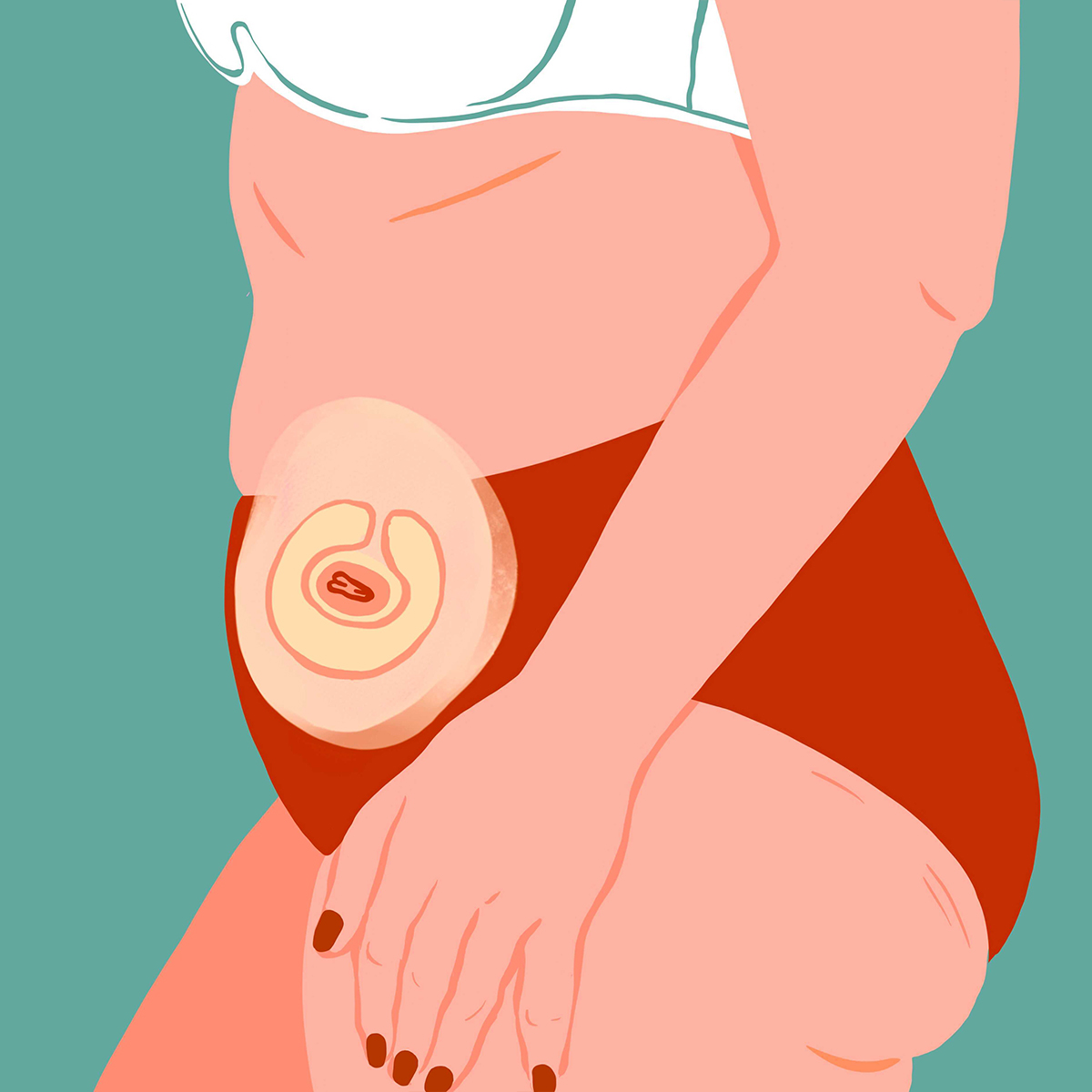
This month, your embryo resembles a tadpole and is made of three layers: the endoderm (inner layer), mesoderm (middle layer), and ectoderm (outer layer). These layers will eventually turn into organs and tissues.
The endoderm will eventually turn into lungs and the gut, the mesoderm is forming into the heart and circulatory system, and the ectoderm is starting to develop the neural tube, which will eventually turn into your baby’s brain, spinal cord, and nerves.
You might also notice some outward signs of pregnancy beginning to appear. Changes you might detect include:
More pronounced blood vessels
Blood vessels, especially on the breasts and abdomen, become more pronounced as the amount of blood in your body increases to bring nourishment to your growing baby. Your total blood volume increases by about 15% during the first trimester alone! By the end of pregnancy, your heart will pump about 40% more blood than it did pre-pregnancy.
Expanded uterus
Although you can’t feel it, your uterus has begun to expand, growing from the size of a clenched fist to the size of a softball by the end of your second month. As a result, you might notice your jeans fitting a bit more snugly these days — though, probably not enough to break out the maternity pants just yet.
Pregnancy tips at 5 weeks
Childbirth might seem like a long way off, but as Lizellen La Follette, M.D., OB-GYN at Marin General Hospital in Greenbrae, California, recommended, being an early bird when it comes to choosing and registering for childbirth prep classes has its benefits. “You might want to register for childbirth classes now because sometimes these classes fill up early,” she noted.
It’s during the second month of pregnancy that your baby’s skeleton changes from cartilage to bone, which means increasing your calcium intake to about 1,000 mg per day is a must to make sure your baby’s bones (and your own skeleton) are healthy and strong. Good dietary sources for calcium include milk, yogurt, and cheese. Non-dairy sources for the bone-building mineral include fortified soy milk, leafy green vegetables, and sesame seeds.
Your pregnancy checklist at 5 weeks
If you haven’t scheduled your first prenatal visit with your OB-GYN or midwife yet, make sure you prioritize doing so this week. Some other things you might want to put on your five week pregnancy checklist include:
- List all your medications and supplements so your health-care provider can help you determine if they are safe to take during your pregnancy.
- Gather your family health history(ies) so you can inform your provider of any chronic conditions or genetic abnormalities that may run in the family.
- Consult with your doctor to see if you should get any vaccines such as for the flu, coronavirus, or whooping cough (T-dap) to protect yourself and your baby.
You should also stop smoking, using alcohol or drugs, and cut back on your caffeine consumption.
What are you eating for you and your baby?
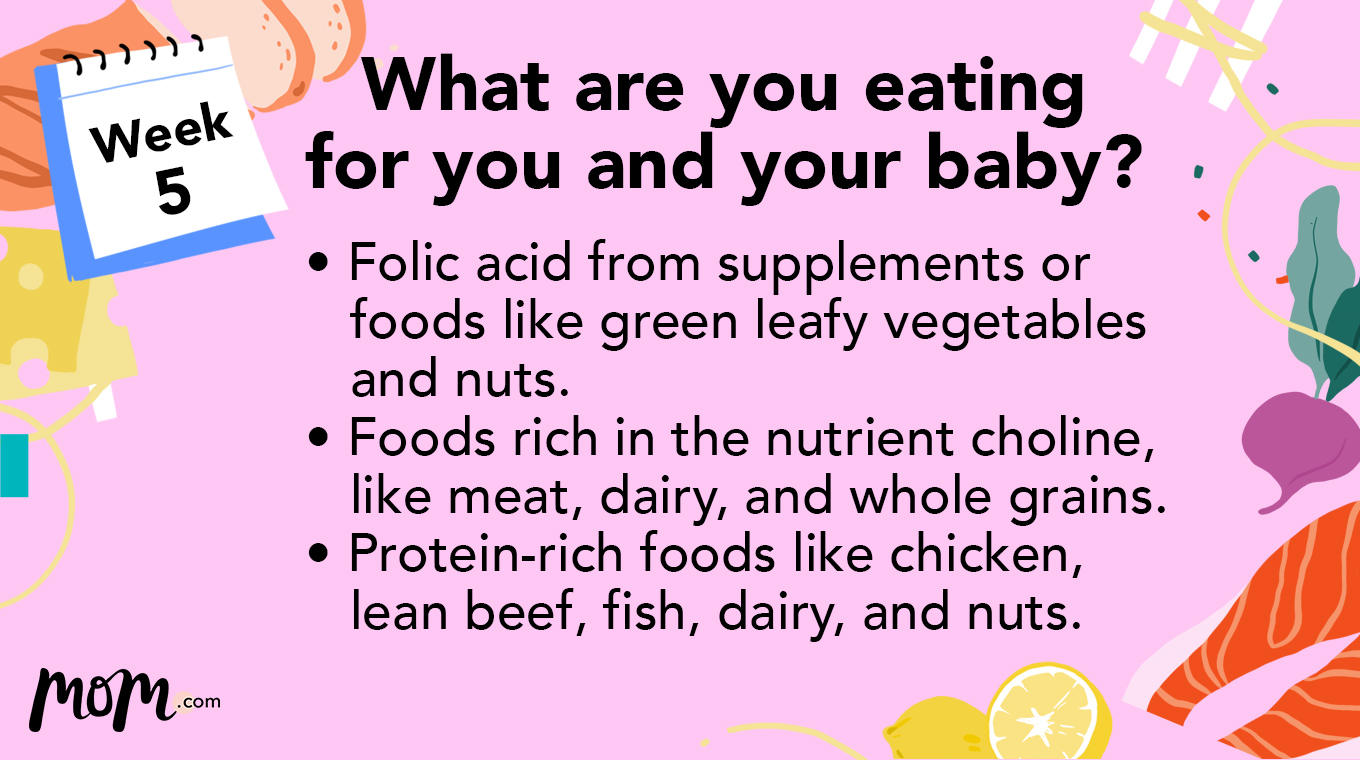
Ensure a healthy diet for yourself at five weeks pregnant by eating foods high in nutrients and adding supplements and vitamins as necessary. Now that your baby is dependent on you for development and growth, consider adding the following foods to your diet:
Folic acid
Folic acid, a B vitamin, is an integral component for neural tube, central nervous system, and brain development. Eat foods like green leafy vegetables, broccoli, chickpeas or kidney beans, nuts, and oranges or strawberries. You can also take a folic acid supplement.
Choline
Choline is an essential nutrient that is necessary in many physiological processes, such as producing neurotransmitters in the brain and phospholipids that are part of cell membrane structures. Along with folic acid, it helps decrease neural tube defects and is vital for developing the memory center of the fetal brain. You can find choline in foods like meat, fish, dairy, eggs, potatoes, broccoli, nuts, seeds, and whole grains.
DHA
DHA is a healthy fat and an omega-3 fatty acid essential to your baby’s brain and eye development. You can ingest DHA from supplements or prenatal vitamins, or you can eat foods like fatty, oily fish such as salmon, sardines, seaweed, dairy, or omega-3-enriched or pasture-raised eggs.
Proteins
To ensure healthy development of tissues, antibodies, hormones, and enzymes, you’ll need to eat three servings of protein a day. Some protein-rich foods are skinless chicken, lean beef, eggs, fish, dairy, nuts, or legumes.