The miracle of life is truthfully only part miracle, more like 50%. The other half is a little science and a lot of hard work. From pregnancy to birth to postpartum, a birthing person’s body completely transforms, and those transformations are just blips on the radar. One thing I wish I knew going into pregnancy was not just how my body would change during and around it but also the deep impact it would have on my body forever. One common postpartum reality most of us moms share is a weakened pelvic floor, which causes spasms, pain, and urinary issues.
A modern solution to a centuries-old problem? Botox. Yes, needles in the nether regions arguably sounds almost worse than childbirth, but according to the New York Post, more and more women are turning to it as a long-term solution.
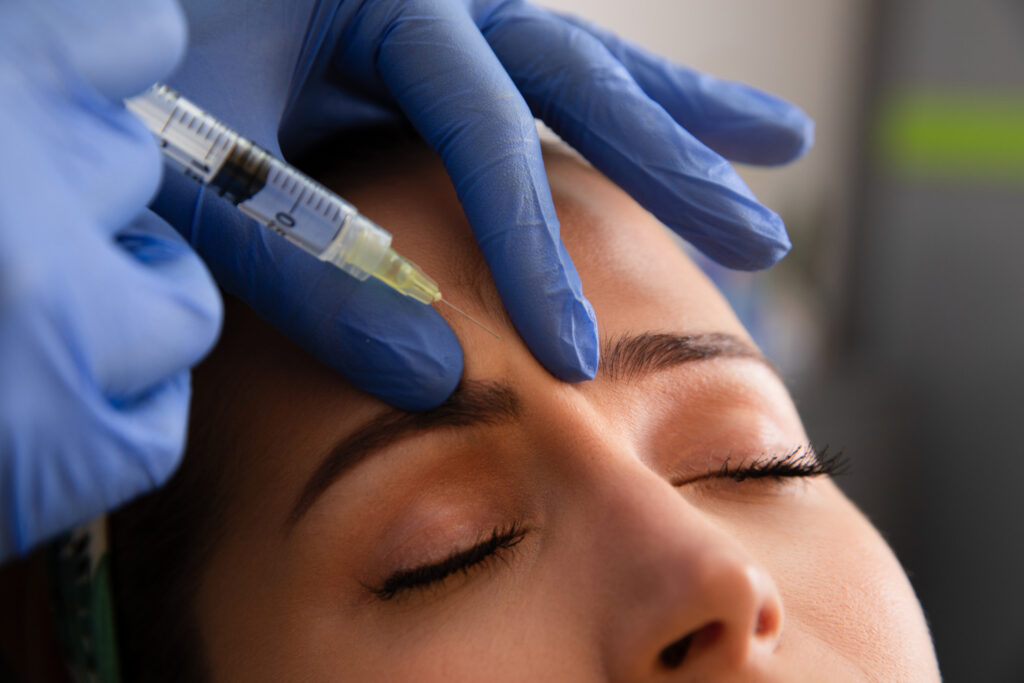
In addition to boosting physical confidence, Botox can be used to relax pelvic floor muscles that make peeing, intercourse, and general discomfort much easier to manage.
“Childbirth can cause muscular damage due to trauma and severe stretching of the pelvic floor muscles,” Dr. Sameea Chughtai, a Chicago-based, board-certified physician, explained to the Post. “When these muscles are disrupted, later on women can experience tension, spasms or pain in the pelvic area.”
In fact, Botox can help with a myriad of problems: It’s used to relieve chronic migraines, twitching eyes, bladder issues, neck spasms, and excessive sweating. It’s even been used to treat serious chronic illnesses to help with muscle spasticity for people dealing with multiple sclerosis, cerebral palsy, strokes, or significant trauma to the spinal cord or brain.
However, Botox in gynecology is still an evolving practice. It has made significant strides in the last decade, however, and is proving to be safe and promising.
“As research continues, Botox is likely to become an even more integral part of the therapeutic arsenal for physicians addressing challenging cases of pelvic pain and chronic vaginal discomfort,” Chughtai assured the newspaper.
The process itself is fairly turn-key. Patients are first evaluated to determine needs, and once a plan is put in place, it can be done same-day in the office. Doctors apply a numbing agent before the Botox is injected into the pelvic floor muscles with two to four shots, depending on the case.
“During the procedure, most patients report experiencing only minimal discomfort, often describing the sensation as a fleeting pinch or a mild, transient pressure,” Chughtai noted.
Doctors recommend that for 48 hours patients avoid sexual activities or exercise, but once they’ve recovered, effects can last up to six months.
And if you’re too scared of needles but still in need of relief, there are plenty of other options to try. Pelvic floor exercises, topical estrogen, and nerve pain medications could all potentially help. Just consult with a doctor first.