What to Know
he judge overseeing Lindsay Clancy’s case heard arguments Thursday afternoon on a pair of motions essentially seeking to limit the emotional impacts of what is expected to be a devastating trial.
Clancy, 35, is facing three counts of first-degree murder in connection with the January 2023 strangulation deaths of her children — Cora, 5, Dawson, 3, and 8-month-old Callan. Prosecutors claim she carefully plotted the killings; Clancy’s defense will argue she was not criminally responsible for their deaths because of mental health issues.
Judge William Sullivan convened the hearing Thursday afternoon following the conclusion of jury selection earlier in the day. He has set opening statements for Monday morning. Witness testimony could go as long as eight weeks.
The first motion argued Thursday was filed by Clancy’s ex-husband, Patrick.
Patrick Clancy is asking the judge to restrict the public distribution of his anguished 911 call upon finding the bodies of his three children, autopsy photos of the kids, photos from before their deaths, the clothes they were wearing when they were killed and photos of the crime scene.
Patrick Clancy’s lawyer, David Meier, said he wasn’t trying to tell either side how to try their case, or to limit the evidence ultimately submitted to the jury. Instead, Meier told Sullivan he should issue a “limiting instruction” for the media governing how the evidence can be disseminated.
Sullivan had previously allowed prosecutors to play a recording of the 911 call and show the photos to jurors at a pretrial hearing in June.
Assistant Plymouth District Attorney Jennifer Sprague said prosecutors would defer to Sullivan, so long as the evidence could still go before the jury. She noted the crime scene photos were taken after the children were removed from the scene and said there was nothing specific to the clothing that required limiting who could see it.
But defense attorney Kevin Reddington urged the court to consider “humanity.”
“Let’s call a spade a spade, judge,” he said. “I have been in this court every time we’ve had pretrial hearing, indicating to the court the circumstances of the death is not in dispute, circumstances of this horrific act are not in dispute.”
“What I can’t fathom is the district attorney’s intent to put a circus in front of this jury that’s calculated to just inflame the passions of the jury,” he said.
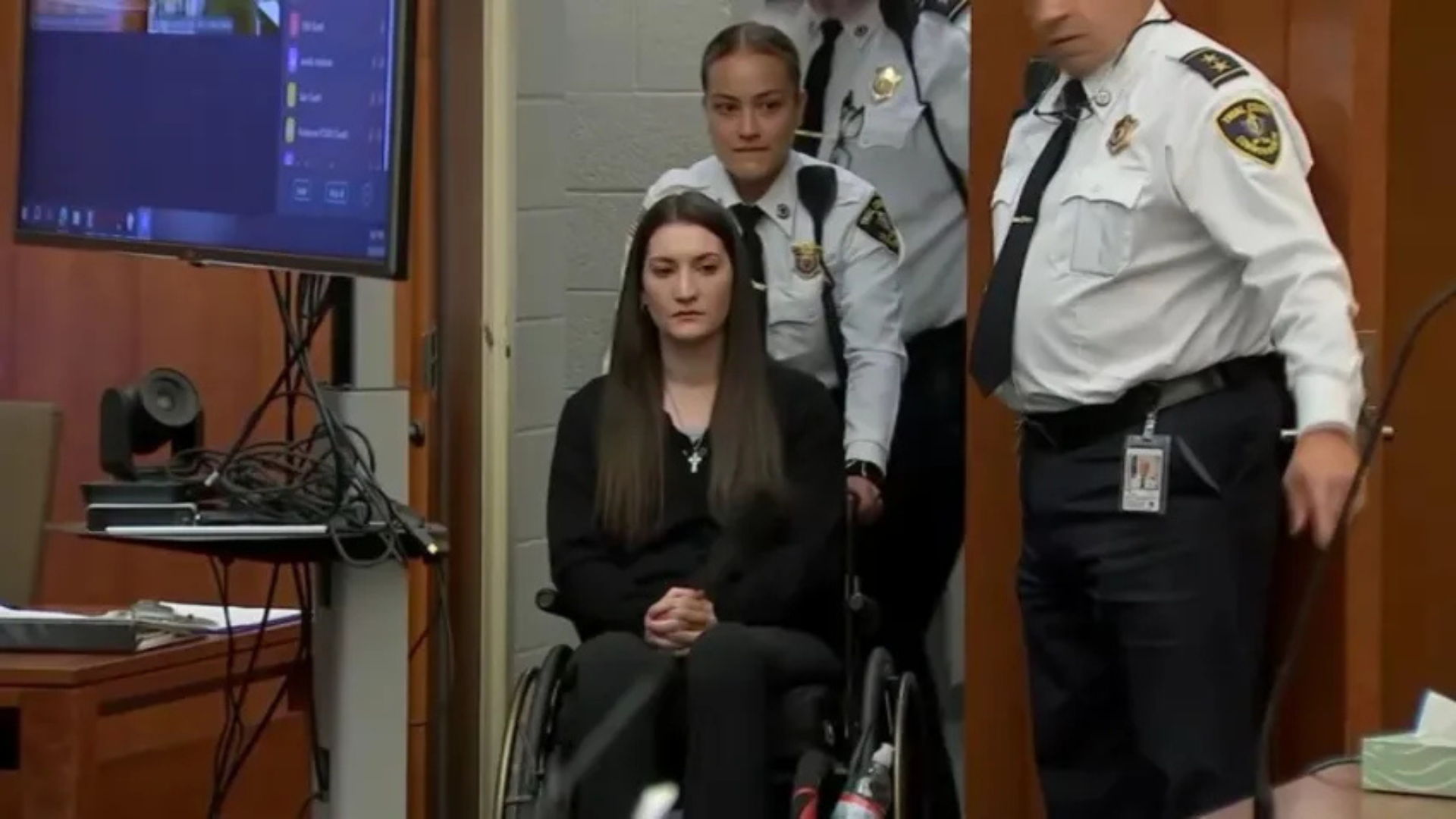
Sitting at the defense table, Lindsay Clancy became visibly emotional as the arguments wore on. At one point, she appeared to wipe a tear away from her face.
Reddington said Patrick Clancy — a “young man that has suffered one of the worst tragedies that anyone could ever suffer” and is “trying hard to move on with his life” — should not have to be confronted with the horrific evidence from the night the children were killed. He noted that Patrick Clancy has remarried.
The typically affable judge cut Reddington off there, urging him to focus on the specific question raised by Patrick Clancy’s motion. Reddington indicated he agreed with the request, but added another swipe at prosecutors, saying, “I still want to say I think it’s reprehensible the way the government is trying this case.”
When Sprague tried to counter that Reddington was trying to “brush past what happened to these children” and “whitewash it away,” the judge quickly shut her down.
Sullivan said he would take the request under advisement and issue an order Friday morning.
The next motion was Reddington’s request to limit testimony from first responders who went to the family home on the night the children were killed. He argued that the testimony of just one police officer, firefighter or EMT would suffice.
“Without sounding as though I’m trying to minimize the horror of what transpired here … legally and objectively, I suggest to your honor that it serves no purpose other than to inflame or try to inflame the passions of the jury,” Reddington said.
During his argument, Reddington rattled off brief summaries of the testimony from first responders to the grand jury that indicted Clancy.
Sullivan, though, suggested the motion was premature.
“It’s difficult for me sitting here right now to tell the commonwealth you can’t call witness number two without knowing what witness number one would say,” he said.
Sprague told the judge each first responder’s testimony would go toward proving Clancy committed the murders.
The fact that there were three victims, and that Clancy herself was injured after cutting her wrists and neck and jumping from a second-story window, means more people will be called to testify, she said.
“It was a chaotic scene,” Sprague said, noting that first responders initially believed Clancy was the only person injured. “We have multiple people working on these children trying to save their lives.”
“The Commonwealth did not choose the number of victims; the defendant did,” she said. “The Commonwealth did not choose the ages of the victims; the defendant did. The Commonwealth did not choose the horrific nature in which they died; the defendant did.”
To reduce the number of witnesses, prosecutors would have to leave out testimony about one of the three children, Sprague said.
She invited Reddington to “tell me which of these children don’t matter,” prompting another rebuke from Sullivan.
“We don’t need that,” the judge interjected.
Sullivan said he would not rule on the request before any witnesses had testified. Instead, he told the lawyers he would ask them to come to sidebar and argue the issue when it became relevant.
Charlie McKenna; masslive.com; (TNS) || ©2026 Advance Local Media LLC. Visit masslive.com. Distributed by Tribune Content Agency, LLC.