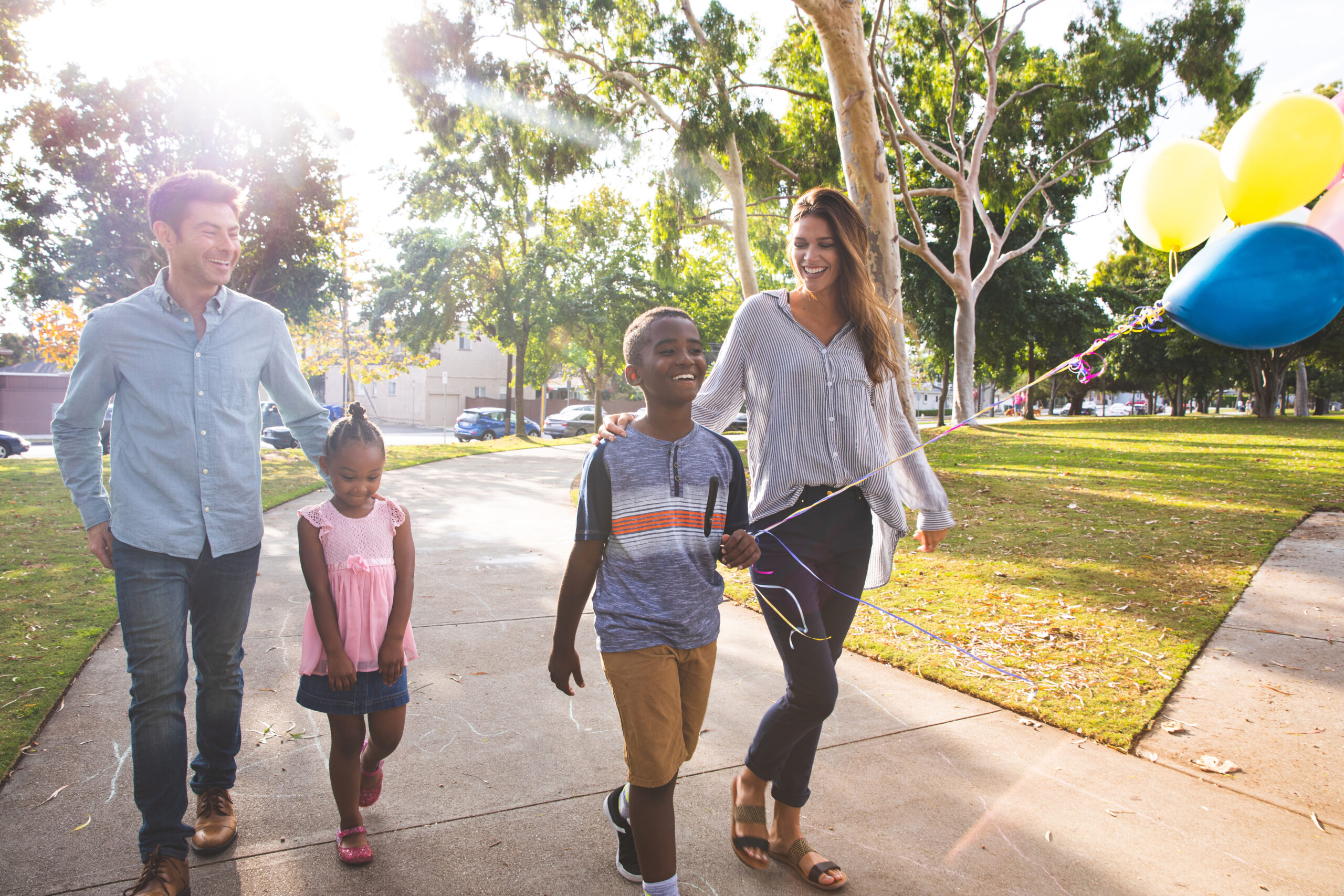
My family’s adoption status is obvious. My husband and I are white, and our four children are Black. Curiosity comes with the adoptive family territory. We’ve been asked all sorts of questions, such as where our children are from (Missouri) and why we adopted (I have an autoimmune disease).
Questions aren’t always framed tactfully
Likewise, my children aren’t charity cases
Adoptive parents should not be put on some sort of imaginary pedestal for choosing to adopt. I tell people, simply put, my husband and I adopted for selfish reasons. We wanted to be parents, and we felt it was best not to have children the “old-fashioned way” due to my chronic disease.
Adoption wasn’t our second choice, despite what others believe. We also didn’t adopt to impress anyone. We aren’t our children’s rescuers. However, when I offer this clarity, strangers want to know, well, what is my children’s stories? Why were they “given up” (ahem, they were “placed”) for adoption? Again, that is private — not something we share with others — out of respect for our kids and their first families.
Though adoptee (sometimes orphan) stories are often the center of made-for-television movies, animated children’s movies, and books, adoption isn’t a glamorous, happy ending, one-size-fits-all narrative. Adoption is always rooted in loss — for the adoptee, for the biological parents, and sometimes, also, for the adoptive parents.
So when people approach us and say that our children are "so lucky," our response is always the same
We, the parents, are the lucky ones. We have the honor of being our children’s chosen parents, and that’s an honor and responsibility that we don’t take lightly.
We also advocate that our children have the right to feel as they do, working to process what it means to be a person who was adopted. Though we are grateful to have open adoptions with their birth families, there is still so much to work through. The adoption isn’t done as soon as the judge signs the adoption decree.
Adoption is an ongoing journey, full of ups and downs
We cannot — and should not — reduce adoptees to being “lucky.” We never know what their life has been like so far — and what the future holds. The best thing we can do, as a society, is give the adoptee space to see where that journey takes them, as well as honor how they feel about their story.