You’re 14 weeks pregnant!
What does 14 weeks equal in months?
At 14 weeks pregnant, you’re at the beginning of your fourth month of pregnancy and second trimester. Here’s a quick primer what pregnancy weeks equal to in months in your second trimester:
- Month 4: Weeks 14 to 17
- Month 5: Weeks 18 to 22
- Month 6: Weeks 23 to 27
Your ultrasound
Generally, there isn’t normally an ultrasound at 14 weeks. For most pregnant people, the American College of Obstetricians and Gynecologists (ACOG) recommends they get at least one ultrasound around 18 to 22 weeks. If you’re going in for an amniocentesis between 15 to 20 weeks, the OB/GYN will also conduct an ultrasound. These ultrasounds check on the health and development of the fetus and can estimate gestational age, screen for certain genetic disorders, and check for fetal heartbeat.
Your pregnant belly at 14 weeks
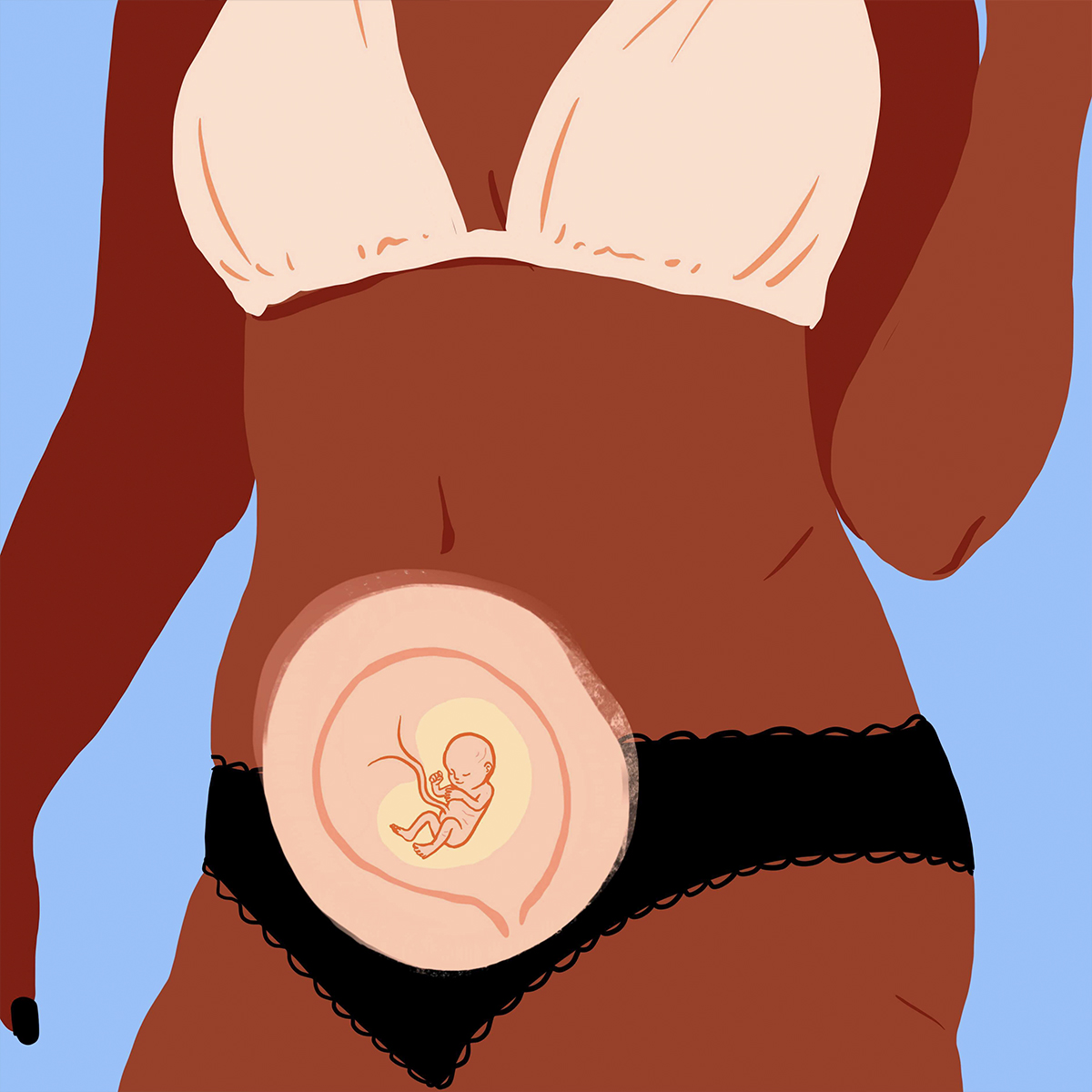
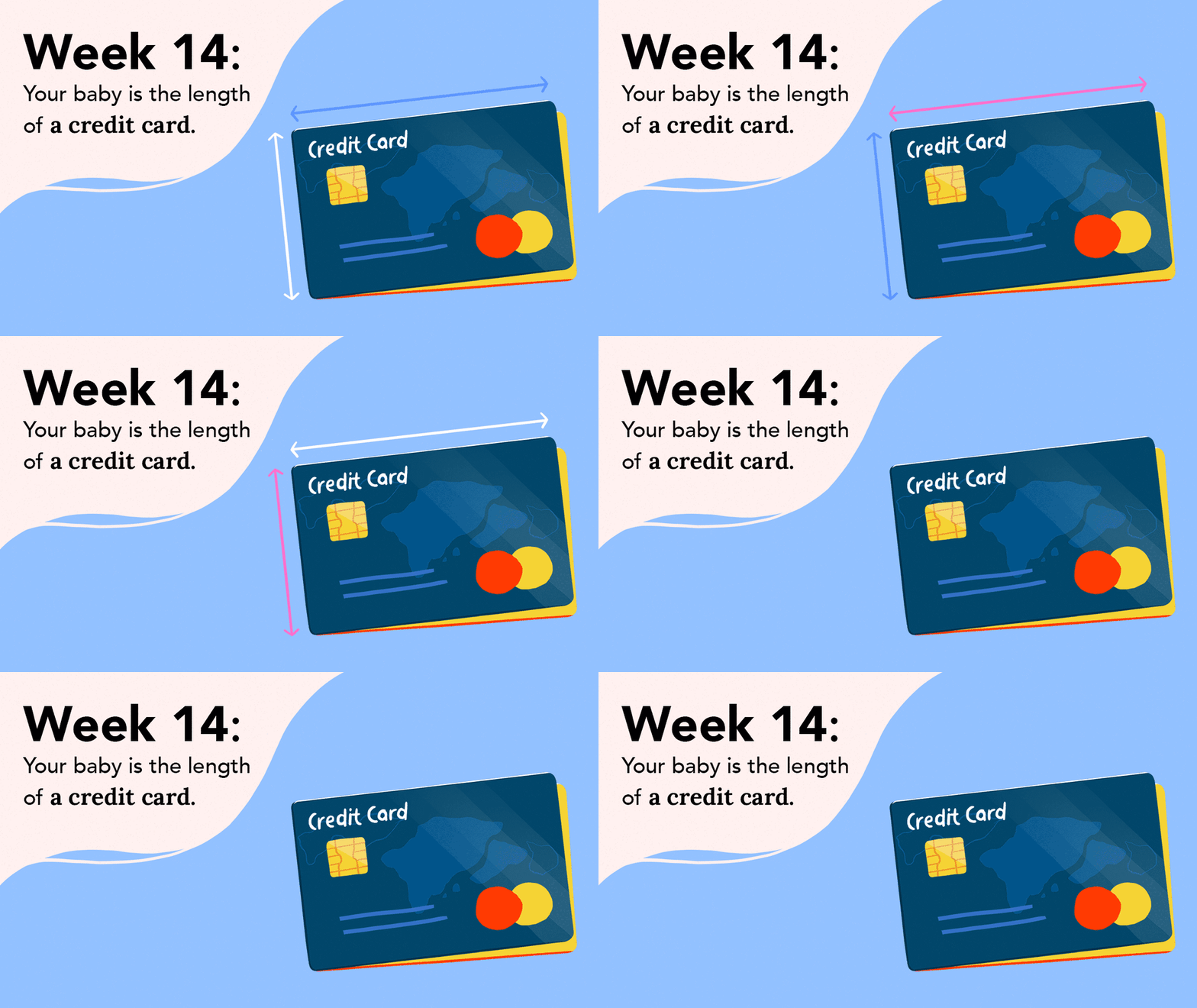
At 14 weeks pregnant, your fetus is about the length of a credit card, measuring about 4¾ inches long from crown to rump, and weighing approximately 3 1/2 ounces. Your belly may feel achy as your uterus expands and makes room for your baby as it grows.
Your baby’s mouth begins making sucking motions, probably to prepare for breastfeeding. Amniotic fluid is routinely swallowed and passed as urine by your baby, the main supplier of its amniotic fluid. One other cool thing is that the fetus is now growing lanugo, which is a very fine peach-fuzz baby hair to help keep their body warm.
Other changes you might notice this month:
- Your nipples and areolae (the darker skin around the nipple) become even darker.
- Though less tender than in the first trimester, your breasts continue to grow in size.
One pregnancy-related change you want to avoid? Varicose veins. As your uterus expands and your baby grows, the added weight presses down on your leg veins. If your leg veins bulge, put your feet up when you can, go for walks to improve blood flow and ask your provider about wearing support stockings. Eating vitamin C-rich foods can also help, as vitamin C assists with healthy circulation.
Pregnancy tips at 14 weeks
Now that you’re in the second trimester, you may want to do the following for yourself:
Make a dental appointment
Pregnant women tend to be more susceptible to gum inflammation so make sure to keep your bi-annual teeth cleaning appointments! You don’t want to get periodontal disease if you can prevent it.
Start your baby registry
Ask your friends who already have babies and children what are the most useful items they own. Put those on your baby registry and try to avoid the temptation of only buying cute but impractical items. (Though it’s okay to have a few of those, too!)
Sign up for birthing classes
If this is your first pregnancy or first baby, you may want to consider signing up for a birthing and/or parenting class. While no class can fully prepare you for birth or parenthood, it’s still nice to feel as if you’re in control of some of the process (like learning how to burp a baby or change a diaper).
Your pregnancy checklist at 14 weeks
Once the second trimester starts, you will be at the OB/GYN every four weeks so make sure you schedule those visits ahead of time.
Prenatal Testing
Sometime in the next five weeks, you’ll be offered a blood test to help screen for Down syndrome. You might also be offered amniocentesis, which tests a small sample of amniotic fluid withdrawn by an ultrasound guided needle. Should you have these tests performed? To get answers, this is a great conversation to have with your prenatal care provider at your next appointment.
What are you eating for you and your baby?
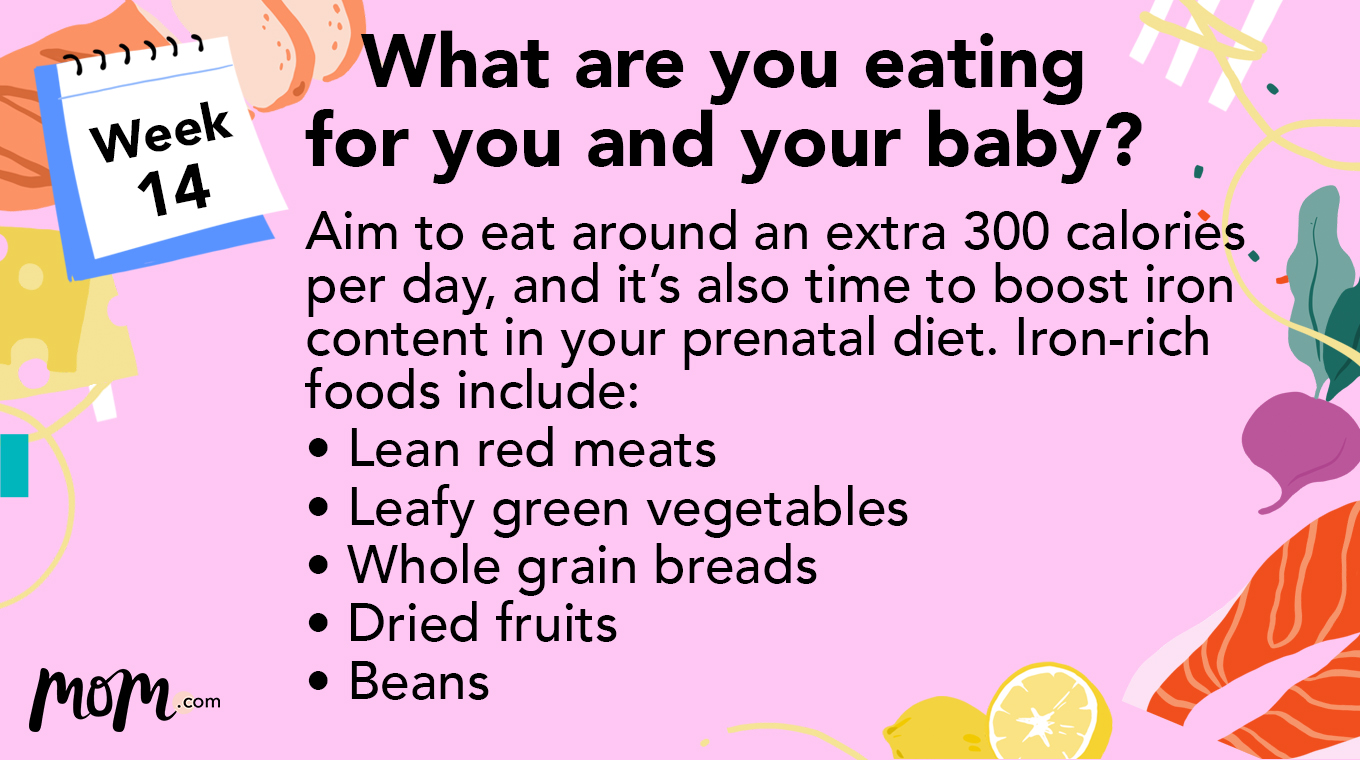
Now that the morning sickness is diminishing, your appetite at 14 weeks pregnant may be roaring back with a vengeance. Aim to eat approximately an extra 300 calories per day to provide the nutrients and calories for your growing baby. If you’re pregnant with twins, add about another 680 calories to your diet. For higher multiples, check with your nutritionist or OB/GYN for nutritional guidance.
Boost your iron intake
As your body steps up blood production during pregnancy, you need more of the ingredients that make up blood, including iron! To boost iron content in your prenatal diet, “Eat lean red meats, leafy green vegetables, whole grain breads, dried fruits and beans,” recommended Lizellen La Follette, M.D., OB-GYN at Marin General Hospital in Greenbrae, Calif. Pregnant women are at higher risk for anemia. Your OB or midwife may suggest having your iron levels tested to see if you need an additional iron supplement.
Protein
By the latter part of the pregnancy, every day you should eat approximately 1.52 grams of protein per kilogram you weigh. This helps develop the fetus’s brain and other fetal tissues develop. Some excellent sources of protein are:
- Nuts
- Tofu
- Eggs
- Lean meats
- Cooked fish
- Lentils, beans, and peas
Calcium
As with the previous weeks, eat calcium rich foods found in dairy products, dark leafy greens like spinach and kale, almonds, and lentils. Pair what you’re eating with foods that have Vitamin D like salmon, egg yolks, and herring or sardines so your body can better absorb the calcium.
In addition, try to avoid or restrict the following foods:
- Caffeine, alcohol, and drugs
- Undercooked meats
- Unheated lunch meats
- Unpasteurized foods (e.g.: soft cheeses)
- Unwashed fruits and vegetables
- High mercury seafoods
- Raw seafood (e.g.: sushi)
- Raw eggs