What to Know
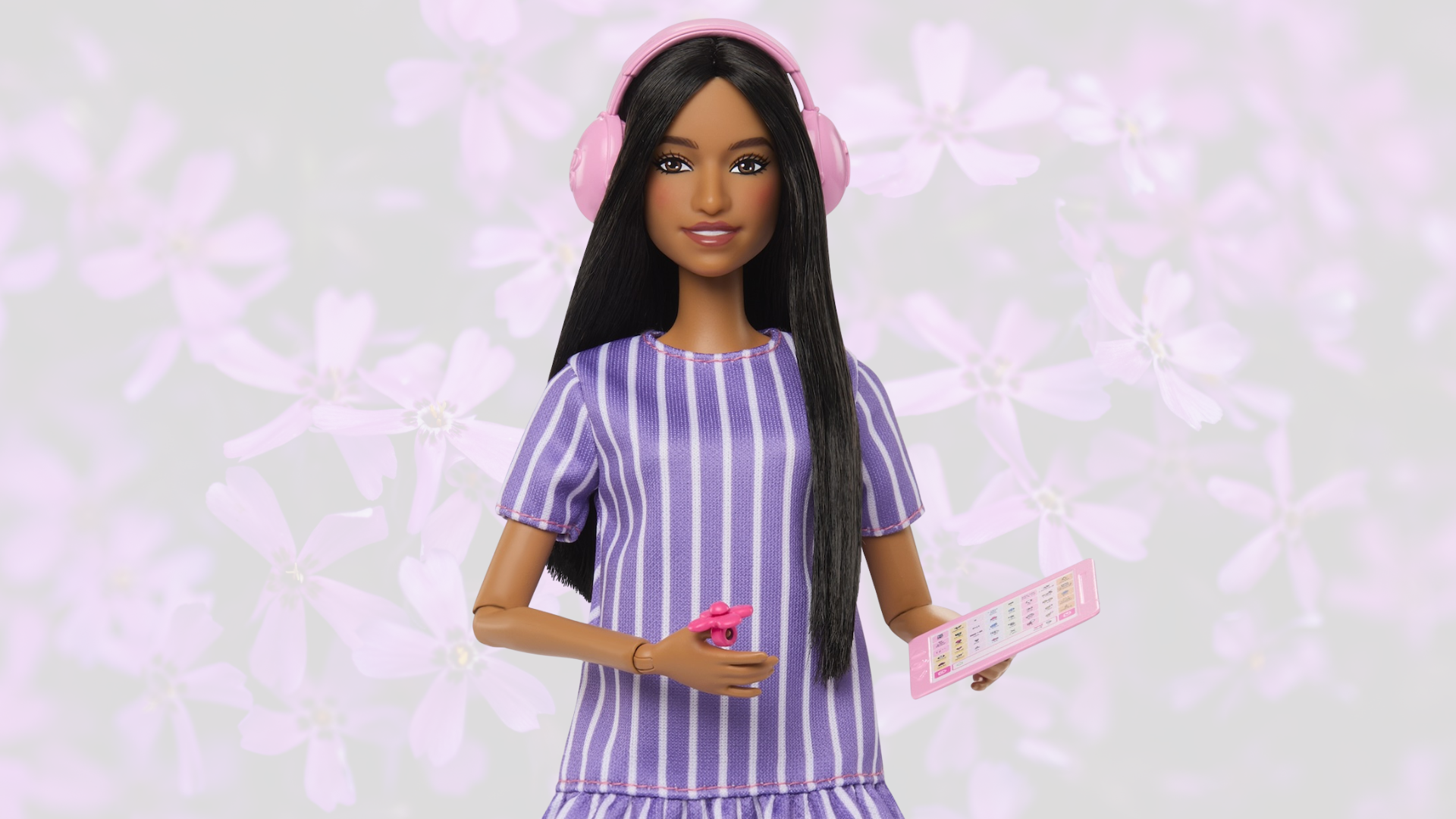
Earlier this week, Mattel announced the brand’s first ever autistic Barbie — a doll in their Fashionistas line who comes with accessories that are meant to help represent someone with autism. The new doll has gotten plenty of praise online so far, but there’s one mom, Dr. Kristyn Sommer, who has autism herself and is pushing back in a major way.
In a video she shared on TikTok, the mom (who also happens to be a developmental scientist) spoke out against the new Barbie and why it may not help children as much as the brand might have intended.
She pointed out that autistic children are not “small autistic adults.”
@drkristynsommer Autistic Barbie was just released, and I have real concerns about it — not because of intention, but because of impact. As a developmental scientist, I know how children understand identity through play. As an autistic parent, I care deeply about protecting the few spaces where autistic kids aren’t being evaluated or corrected. Barbie has always worked because she’s a blank slate. When we label a doll “autistic,” we risk turning an internal neurological experience into a visual template — and that matters for autistic children, especially girls. This isn’t a takedown of autistic Barbie and your joy being represented in mainstream. But it does question what this teaches, who it serves, and how we could do better. You can hold joy and critique at the same time. Both are allowed. #actuallyautistic #AutisticBarbie #AutismRepresentation #Neurodiversity #AutisticVoices ♬ original sound – Dr Kristyn Sommer
Dr. Sommer pointed out that while plenty of adults are cheering the new Barbie on, children’s brains work differently, and instead of seeing the doll as representation, they may not be able to get the positive effects of the doll the way the brand intended.
She is also worried that it has turned autism into a diagnosis that you can “see” by looking at someone, when that’s not the case — autism looks so different for everyone with this diagnosis.
She claims the doll has created a “right way” to be autistic.
The doll comes with accessories that some autistic people use to assist them, like noise blocking headphones, a fidget spinner, and an AAC device, but these items aren’t one size fits all. Dr. Sommer worries that this could create “boundaries” around what it is to be autistic that don’t exist in the first place.
“[The doll] introduces a visual template,” she said, adding, “The moment that exists, kids, particularly girls, will start being compared to it. The second problem that I see is that it creates a ‘right way’ to be autistic. If your autism doesn’t look like this … this doll doesn’t say you’re included, it says you’re not being autistic the right way.
She doesn’t believe Barbie should have ever been labeled as autistic at all.
Since Barbie, as a doll, has always been a “blank slate,” Dr. Sommers sees a major problem with changing that.
“For many autistic kids, Barbie is one of the only places where there are no hidden rules, no corrections, no pressure to get it right,” she said. “Labeling Barbie as autistic changes that.”
She added, “Every Barbie is autistic when an autistic child is playing with her because the child defines who Barbie is and what she does.”
The doll was created in partnership with the Autistic Self-Advocacy Network (ASAN).
Though Dr. Sommer obviously isn’t happy with the new doll, according to the comments on Barbie’s Instagram post introducing her, there are a lot of people out there who are.
“As an autistic mother to a non verbal daughter this is literally everything we could have asked for! Thanks for representing us so beautifully!” a fellow mom wrote.
The Barbie is now rolling out to stores, so we should learn more about her impact — for better or for worse — very soon.