You’re 15 weeks pregnant!
What does 15 weeks equal in months?
At 15 weeks pregnant, you’re in your fourth month of pregnancy and the start of your second trimester. Here’s what pregnancy weeks equal to in months for the second trimester:
- Month 4: Weeks 14 to 17
- Month 5: Weeks 18 to 22
- Month 6: Weeks 23 to 27
Your ultrasound
At 15 weeks, there typically isn’t a scheduled ultrasound. Most pregnant folks follow the American College of Obstetricians and Gynecologists (ACOG) recommendation of getting at least one ultrasound around 18 to 22 weeks. If you qualify or your OB/GYN recommends it, an amniocentesis is scheduled around 15 to 20 weeks and the medical professional will also conduct an ultrasound at that time to check on your baby’s health and development. They can also get a better bead on your fetus’s gestational age, check for certain genetic disorders, and listen to your baby’s heartbeat.
Your pregnant belly at 15 weeks
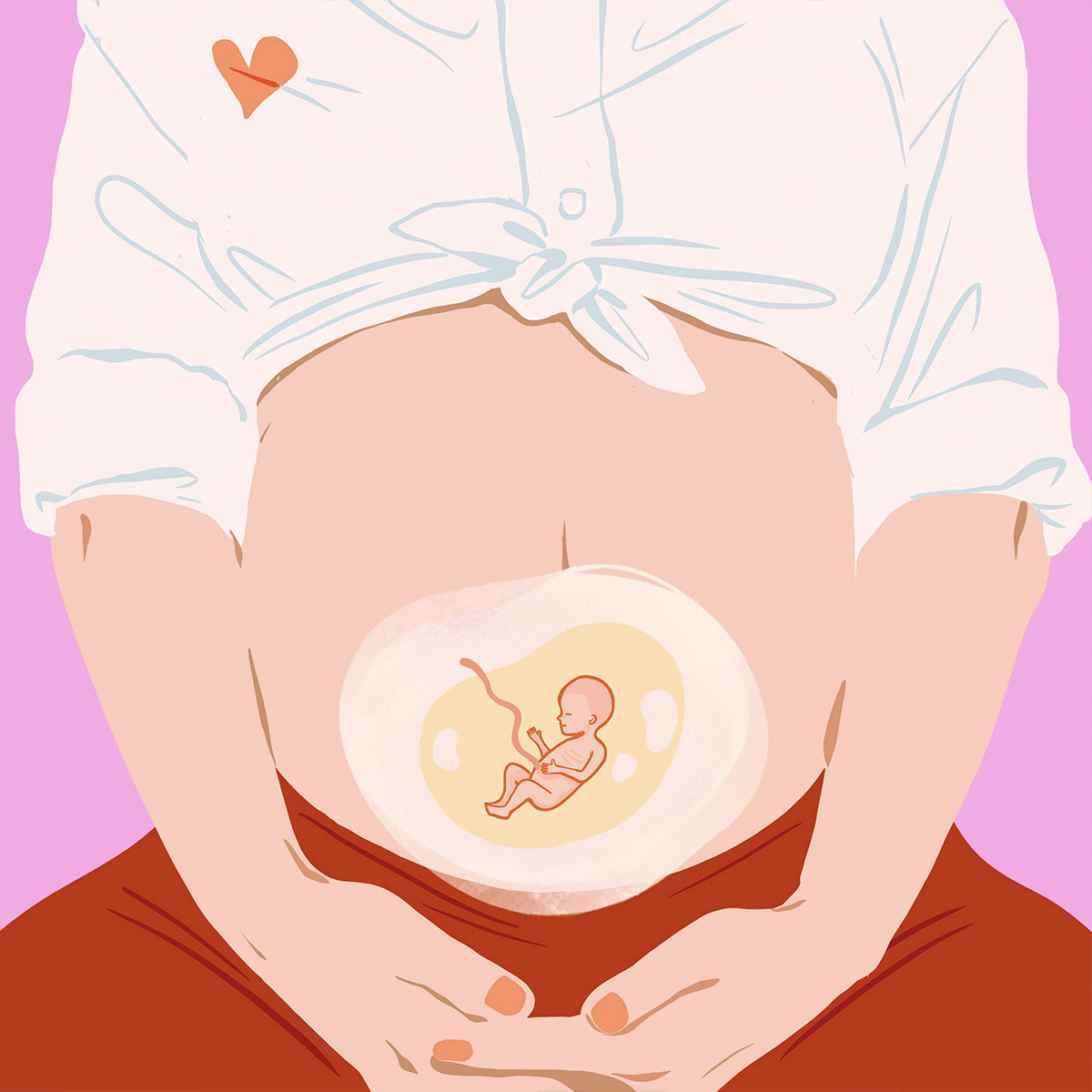
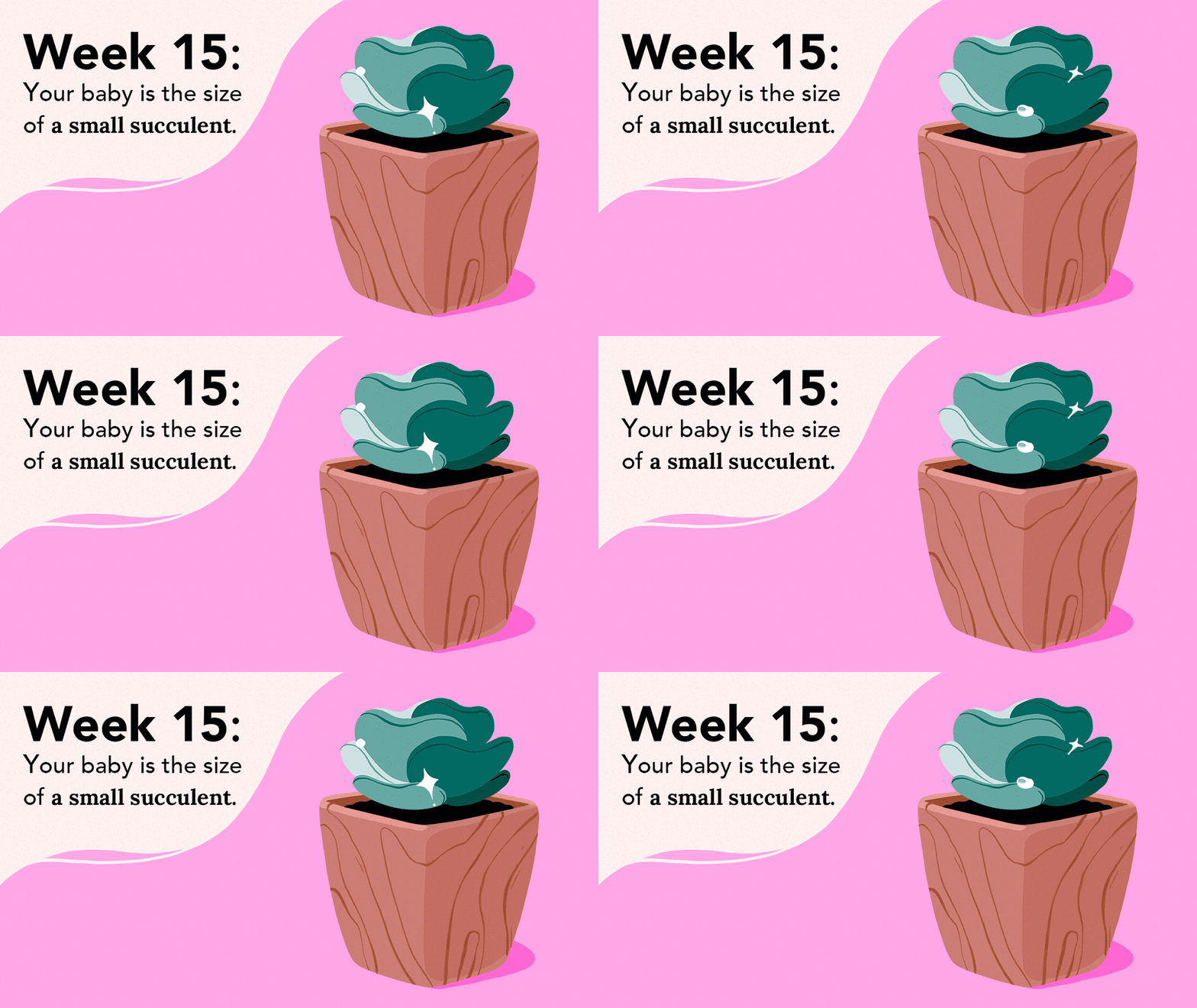
Judging by the relatively small size of your belly, you know that your baby is far from full-term size. During the first trimester, your baby spent much of its time developing basic body structures and organs. The beginning of the second trimester kicks off a time of overall growth. Even though your bump may be expanding, at 15 weeks, your baby is typically around 4 inches long and weighs about 2.5 to 3.5 ounces and about the size of a small succulent.
As the second trimester begins, you may begin to feel your baby moving. The little flutter in your tummy is your baby moving from side to side, kicking or turning around. If you aren’t feeling movement yet, don’t worry. Many women, especially first-time moms, do not feel movement until 18 or 19 weeks. The baby is also moving its mouth now, making sucking motions. Even though your baby can make these movements, they aren’t purposeful motions. At this stage of development, most fetal movements are reflexive.
While your 15-week old fetus doesn’t have the angelic soft skin or fluffy frame of hair that a newborn has, your baby is developing these body parts during the second trimester. Both your baby’s skin and hair are almost transparent, making the fetus appear see-through. The hair, called lanugo at this point, is fine and covers most of the body. The lanugo will start to fall out during your third trimester, but some may stick around until after birth.
Pregnancy tips at 15 weeks
At 15 weeks pregnant, you may want to do the following for yourself:
Find out if you need to schedule an amniocentesis
Generally, an amniocentesis is scheduled for weeks 15 to 20 and is used to determine the health of your baby as well as diagnose for specific birth defects or chromosomal anomalies. It’s offered more often to people who are 35 or older at the time of pregnancy — as well as other people who may need additional genetic assessments.
Ask your doctor about preeclampsia
Find out more about preeclampsia — and whether you’re at risk for it. Generally developing in later pregnancy, typically after week 20, it’s characterized by a sudden spike in blood pressure. In addition to high blood pressure, you may have severe hand and face swelling, terrible headaches, protein in your urine, and abdominal pain. Find out if you are at high-risk for preeclampsia and if your doctor would recommend a daily dose of low-dose aspirin to reduce your risk of preeclampsia.
Make sure you’re eating enough
Whether it’s ensuring you have breakfast or a snack before exercising, regulating your blood sugar and eating enough calories for you and the baby will be key to keeping you healthy.
Your pregnancy checklist at 15 weeks
Once the second trimester starts, you will be at the OB/GYN every four weeks so make sure you schedule those visits ahead of time.
Prenatal Testing
Within the next four weeks, you’ll likely take a blood test to help screen for Down syndrome. You may also schedule an amniocentesis, which tests a small sample of amniotic fluid withdrawn by an ultrasound guided needle. Whether or not you need these tests depends on your prenatal care provider and your general age and health.
What are you eating for you and your baby?
Your appetite at 15 weeks pregnant may be stronger than ever — or at the very least, back to what it was before you found out you were pregnant. You’ll need approximately another 300 calories per day to provide the nutrients and calories for your growing baby. If you’re pregnant with twins, add about another 680 calories to your diet. For higher multiples, check with your nutritionist or OB/GYN for nutritional guidance.
Iron
Due to your increased blood volume, your body will need lots more iron! “Eat lean red meats, leafy green vegetables, whole grain breads, dried fruits and beans,” recommended Lizellen La Follette, M.D., OB-GYN at Marin General Hospital in Greenbrae, Calif. Since pregnant women are at higher risk for anemia, your prenatal practitioner may suggest having your iron levels tested.
Protein
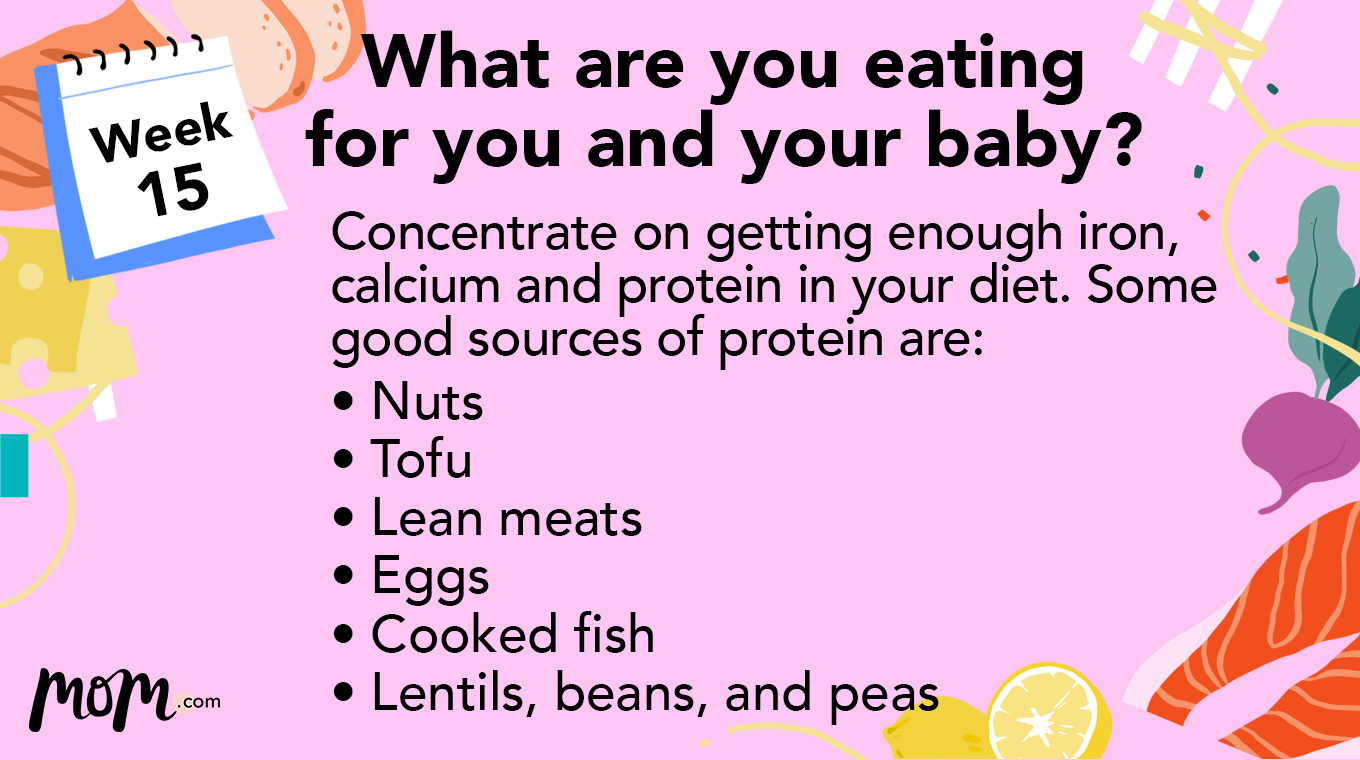
You should be eating approximately 1.52 grams of protein per kilogram you weigh. Protein contributes to fetal brain development as well as other fetal tissues. Some excellent sources of protein are:
- Nuts
- Tofu
- Eggs
- Lean meats
- Cooked fish
- Lentils, beans, and peas
Calcium
For pretty much your entire pregnancy, eat calcium rich foods found in dairy products, dark leafy greens like spinach and kale, almonds, and lentils. Eating the calcium rich foods with foods high in Vitamin D like salmon, egg yolks, and herring or sardines so your body can better absorb the calcium.
In addition, try to avoid or restrict the following foods:
- Caffeine, alcohol, and drugs
- Undercooked meats
- Unheated lunch meats
- Unpasteurized foods (e.g.: soft cheeses)
- Unwashed fruits and vegetables
- High mercury seafoods
- Raw seafood (e.g.: sushi)
- Raw eggs