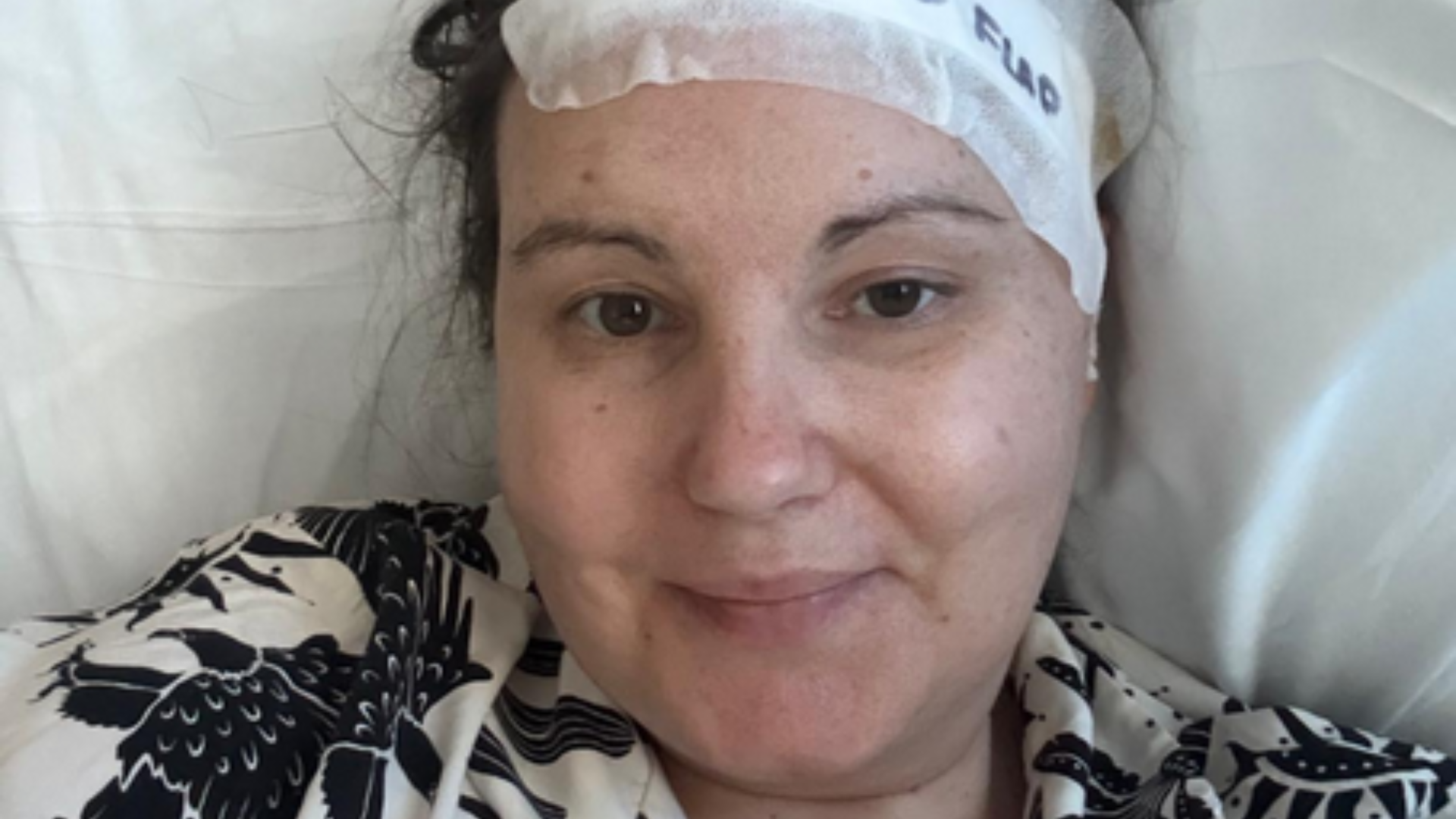
Ask almost any woman, and they will tell you about a time when their doctor didn’t listen to them or believe their concerns. Most of the time, having doctors not listen leads to a diagnosis of something serious down the line. And often, things might not have been as bad if patients were believed when they first brought up a problem. Jodie Boulton, a woman living in the UK, knows this all too well. After she had her son, something didn’t feel right, but every time she mentioned it to her doctor, she was dismissed. Eventually, there was no dismissing her symptoms, and her life has been forever changed because of a brain tumor.
She dealt with something a lot of women face when talking to doctors.
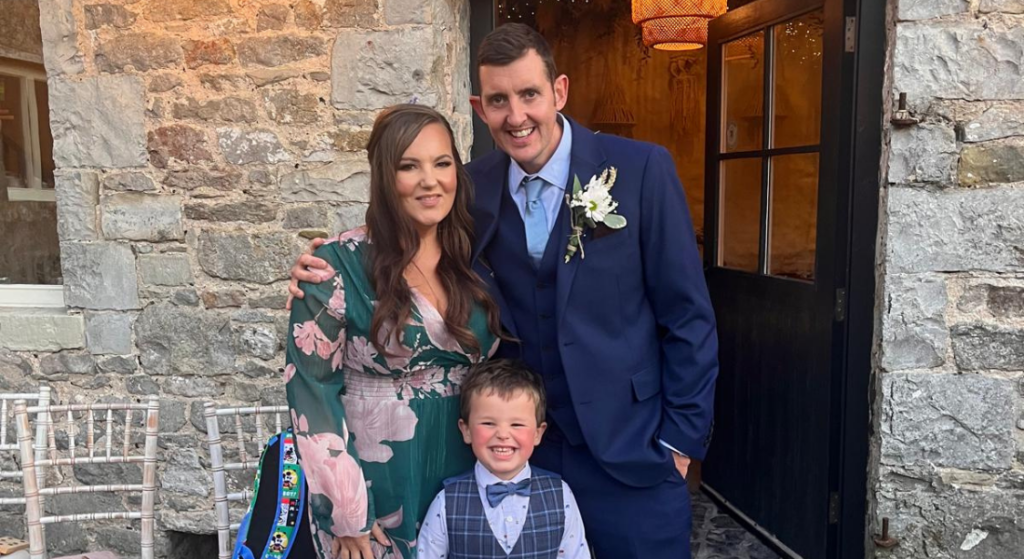
The 38-year-old mom from Wales gave birth to her only child, a son, in 2020. She spoke with UK-based charity Brain Tumor Research to tell the story of what she’s dealt with over the last six years.
She explained that after she gave birth to her son, she started experiencing headaches. “I went back and forth to my GP numerous times over six years and it was repeatedly put down to anxiety after having a baby,” she shared with the charity. “I trusted that explanation, but deep down I knew something wasn’t right.”
Some years later, her periods stopped coming “completely.” She saw another doctor who referred her to an endocrinologist in March 2025. After an MRI, doctors expressed concern over her pituitary gland.
The MRI revealed something shocking.
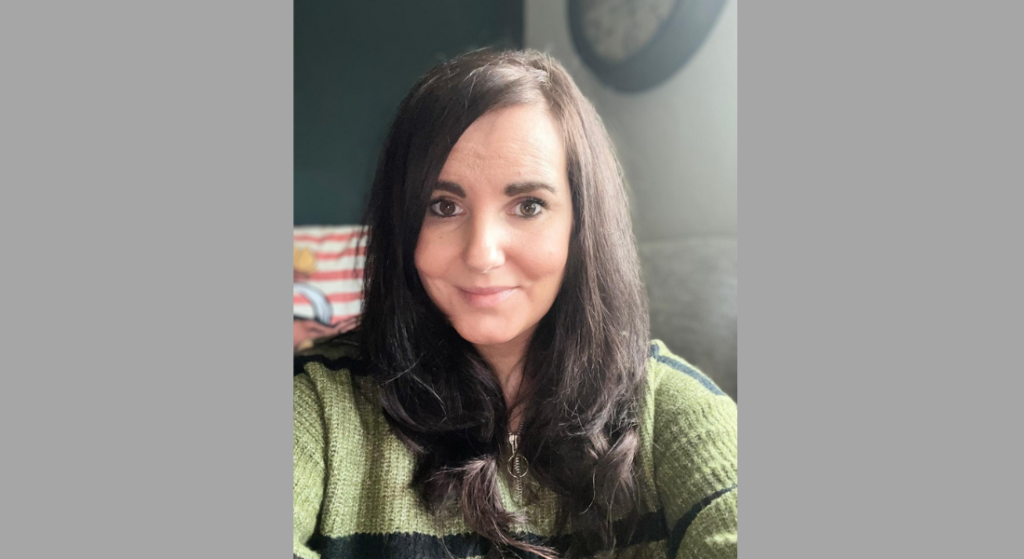
“When I was finally told there was a mass, I felt angry and relieved at the same time; angry that I had suffered for six years without answers, but relieved that I finally knew the cause and hoped something could be done,” Boulton said.
The mom was referred to University Hospital Cardiff, where she was told she had a brain tumor the size of a satsuma, a mandarin orange. More shockingly, she found out it had likely been there for 15 to 20 years. Because of where it sat, the tumor was affecting her hormones, which is why her period stopped.
After developing balance problems and double vision, she decided to have surgery and remove the tumor.
She went in for the 12-hour surgery in June 2025. Doctors were able to remove 85% of the tumor, but 15% was wrapped around her optic nerve and couldn’t be removed, she told the charity. That will have to be treated with radiation.
She had a tumor that was common.
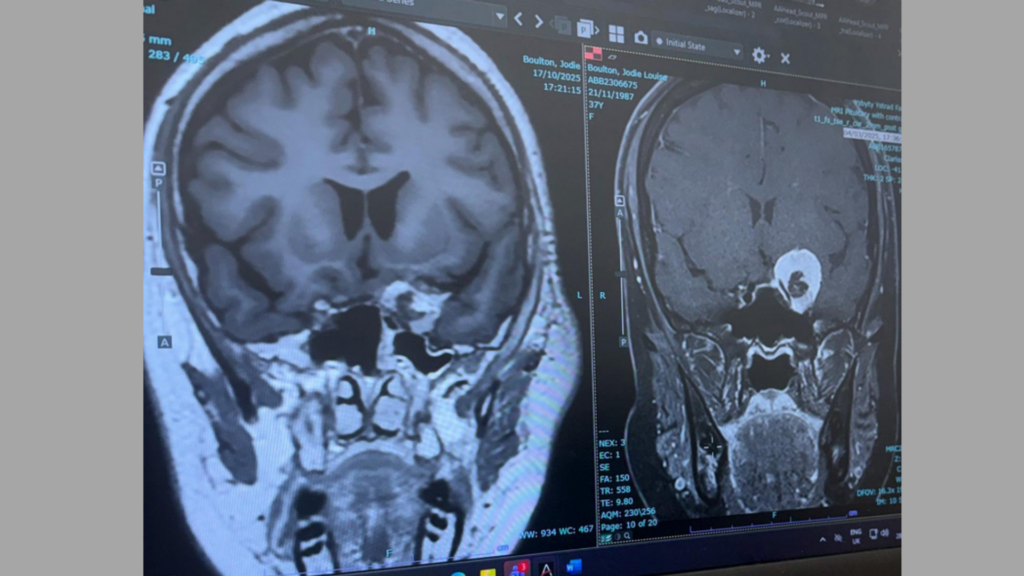
Boulton was told her tumor was a low-grade meningioma. According to Johns Hopkins Medicine, meningioma is “the most common type of primary tumor,” accounting for 30% of all tumors.
“They grow slowly and may exist for years before being detected. Sometimes doctors will discover a meningioma incidentally on a magnetic resonance imaging (MRI) scan of the head or spinal cord,” the website notes.
Common symptoms include headaches, seizures, and blurred vision, all of which Boulton had. It is three times more likely in women than men.
Having surgery wasn’t a magic cure.
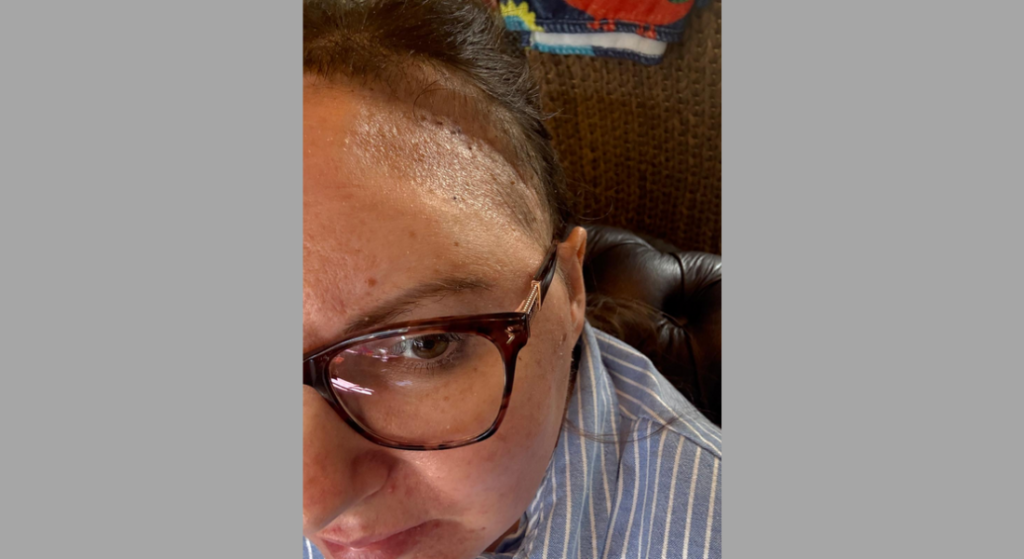
Boulton’s surgery went well, she said, but things went wrong with her aftercare. Ten days after her surgery, her wound started oozing. She visited her GP, and a student nurse was “concerned,” but a more senior nurse “said it looked fine and dressed it with a wet dressing for 10 days. I knew something wasn’t right.”
She went back to Cardiff and saw her surgery consultant, who was “horrified.” The nurse had used the wrong kind of dressing, and Boulton had developed an infection. She required another surgery, where it was discovered the infection had spread to her bones.
Part of her skull had to be removed, and she’s still waiting to be fit with a titanium plate. That means she must wear a hard hat when she leaves the house.
“It’s been incredibly difficult with a six-year-old. I have to be careful about trips and falls, and I rarely go out because of anxiety,” she told Brain Tumor Research. She also “can’t work because of the health and safety risks, and I feel like I’ve lost my independence. I feel angry that if the wound had been treated properly, my life might already be back to normal.”