You’re 10 weeks pregnant!
Though some people feel connected as soon as the very first test is positive, for others, it takes a bit longer to sink in… and that 10 weeks might be when your pregnancy finally begins to feel real. At this point, you’re probably feeling at least a few symptoms, your first OB-GYN appointment is behind you, and if you haven’t already, you might be starting to plan how to share the big news with friends and family — so exciting!
As you begin the end of your first trimester, a lot is going on in your body (and with baby) this week. Read on for what you need to know this week.
Pregnancy symptoms at 10 weeks
Your ultrasound
At this point, you probably won’t have an ultrasound — unfortunately, they usually only happen a few times during pregnancy unless something unusual arises. If you’ve already had a first trimester ultrasound to confirm your due date, you may not check in on baby again until the anatomy scan, which usually happens after the 16 week mark.
Your pregnant belly at 10 weeks
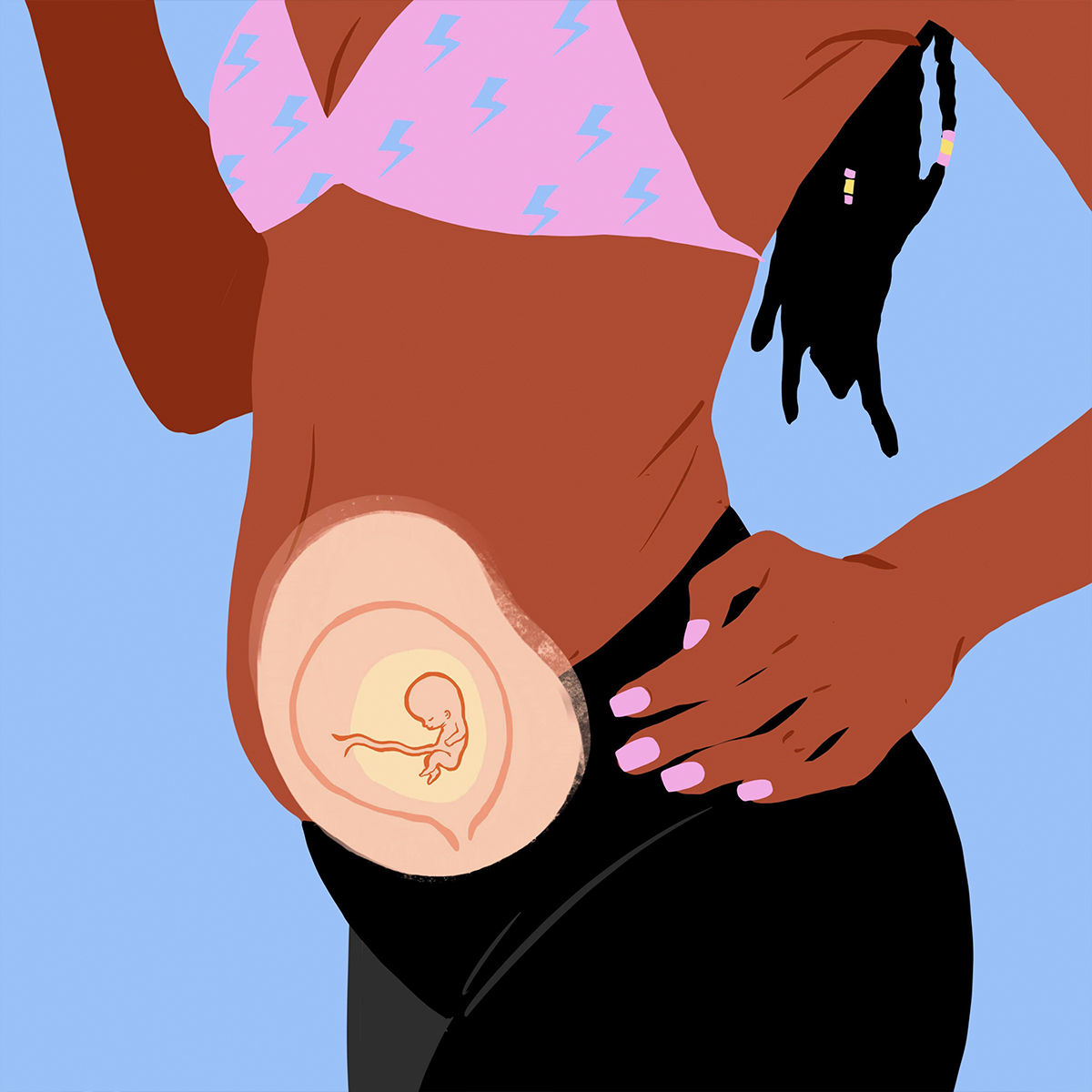
At 10 weeks, you might be seeing the start of a bump toward the bottom of your tummy… or you might not notice any change at all. Either way, it’s normal, and first time moms will likely have to wait a bit longer to see a change.
Pregnancy tips at 10 weeks
Unless you’re one of the lucky ones, this time in your pregnancy might have you feeling pretty crummy most of the time, but take heart: the second trimester is just a few weeks away, and many people find that things begin to get a little easier at that point. Until then, go with the flow. Nap when you can, and eat what you can when you can — while making sure you get plenty of nutrients for baby (and for you!)is the goal, morning sickness may be making that difficult.
“Eat anything that is appealing to you and not dangerous to baby, such as alcohol, raw animal foods, or cheese made from unpasteurized milk,” registered dietitian Elizabeth Ward told Cooking Light. “Also, don’t get dehydrated or let yourself get too hungry as this can make ‘morning sickness,’ which can actually last all day, worse.”
Take it easy, dress comfortably, and remember those prenatal vitamins. There’s a good chance you’ll be feeling much better soon!
Your pregnancy checklist at 10 weeks
This week, try to keep these items on your to do list:
- Decide whether or not you’re going to get the NIPT test, a blood test that screens for Down Syndrome and other chromosomal abnormalities, and can also tell you the sex of your baby — but be aware that, under age 35, this may not be covered by insurance
- Start shopping for maternity clothes if you haven’t already
- Think about how and when you want to tell your employer about your pregnancy and begin researching maternity leave policies
- Schedule your 12 week OB-GYN appointment.
What are you eating for you and your baby?
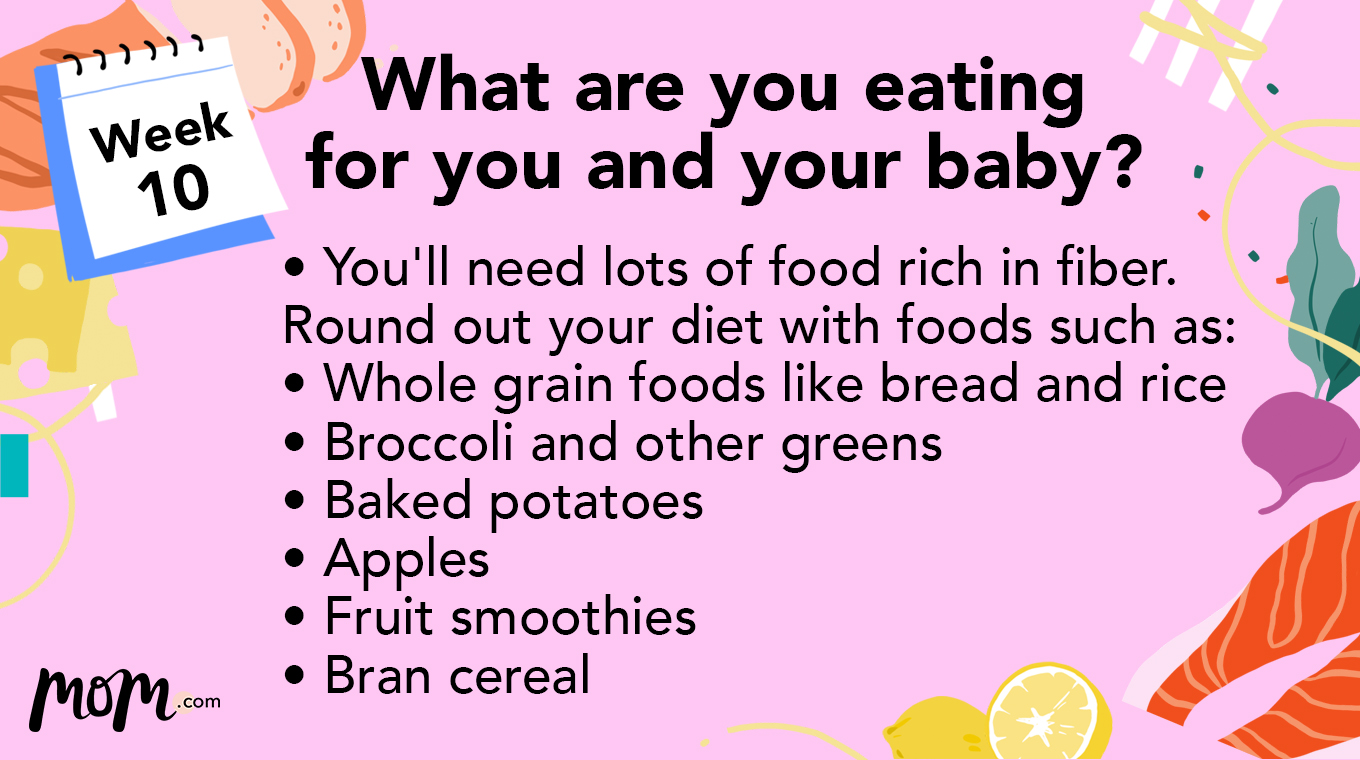
While you’re pregnant, eating to nourish your changing body and growing baby are the name of the game. At this point in your pregnancy, you’ll need lots of food rich in fiber to not only help with digestion but also to regulate blood sugar and lower your chances of high blood pressure or gestational diabetes. Like we said, morning sickness may make that feel impossible, but when making your grocery list, you should consider adding the following:
- Whole grain foods including bread and rice
- Broccoli and other greens
- Baked potatoes
- Apples
- Fruit smoothies
- Bran cereal
Remember to keep up that water intake, too!
When to call your doctor
In the first trimester, it can be hard not to feel anxious — all kinds of different things are happening in your body that may be totally unfamiliar to you, after all. Feel free to reach out to your OB-GYN if you’re concerned for any reason, but these are the signs that definitely warrant a call ASAP:
- You’re experiencing abnormal abdominal discomfort or cramping
- Bleeding of any kind
- Unusual vaginal discharge
- Pain or difficulty urinating
- Fainting or dizziness
- Severe vomiting
- A fever over 100 degrees Fahrenheit
Note: If you are visiting a medical professional during COVID, make sure to ask about the facility’s safety measures and confirm that they are following COVID protocols as indicated by the CDC.