You’re 2 weeks pregnant!
Your ultrasound
Typically, at 2 weeks pregnant, you would not get an ultrasound because most obstetrical exams and visits for pregnancy are scheduled at about 8 to 10 weeks gestation. However, if you have been seeing a fertility specialist, your medical practitioner may conduct an ultrasound to check for fibroids, the thickness of your uterine lining, or the number of follicles in your ovaries (which would grow into eggs). If the specialist finds anything concerning, they may suggest different fertility treatments.
Your pregnant belly at 2 weeks
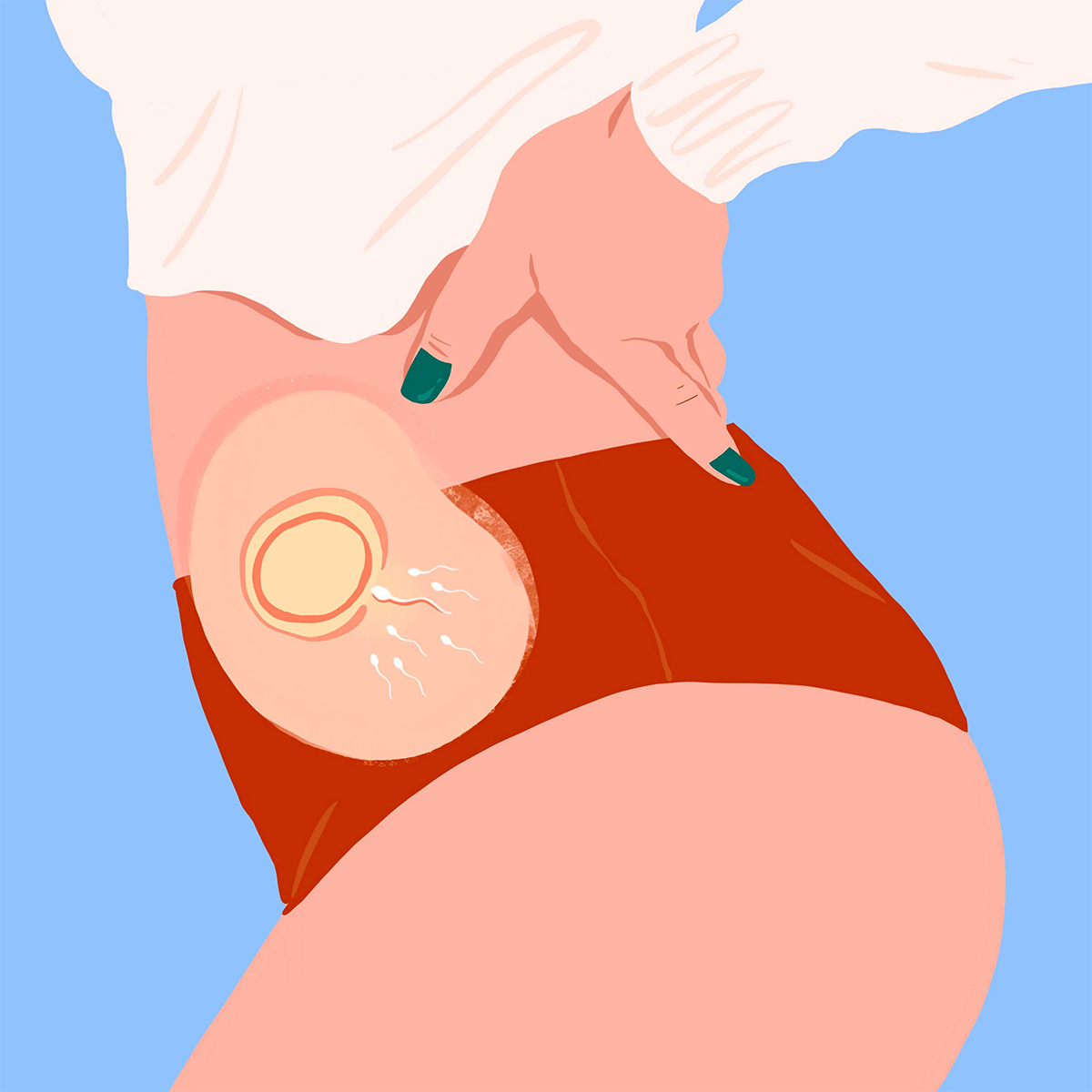
This is the last week of gestational age that you’re not actually pregnant. However, it is likely this is the week of conception. If you have sex during (or up to 3 to 5 days before) that fertile 24-hour period after your egg is released, 250 million sperm from the average ejaculate will attempt to swim from your vagina up through your cervix and uterus to your fallopian tubes and penetrate your egg. If you are undergoing an intrauterine insemination (IUI), the sperm is injected directly into your uterus so it has less distance to travel.
The approximately 400 surviving sperm will finally meet the egg after swimming for roughly 10 hours and work to break through the egg’s outer membrane with an enzyme. Once a sperm succeeds, its nucleus will merge with the egg’s nucleus and their respective genetic material will combine and form a fertilized egg called a zygote.
In general, the sperm will contribute 22 chromosomes and either an X or Y sex chromosome to the 22 chromosomes and X sex chromosome of the egg for a total of 46 chromosomes. The XX combination will grow into a girl (assigned at birth) and the XY combination will grow into a boy (assigned at birth). There are also X and Y chromosome variations, also known as Sex Chromosome Aneuploidy (SCA), where there are variations in the more common number and type of sex chromosomes.
Any variation from the 46 chromosomes — whether fewer or more — is called an “aneuploidy.” There are monosomies (one sex chromosome) where a person is born with only one X sex chromosome (45,X). This is a condition known as Turner Syndrome and is the only viable monosomy of a sex chromosome. (If a fetus only has a Y chromosome, it is not viable.)
There are trisomies where there is one extra sex chromosome and a person is born with 47 chromosomes like Trisomy X (47,XXX), Klinefelter syndrome (47,XXY), and 47,XYY. Even rarer are when there are two or even three extra sex chromosomes present — which typically present more pronounced symptoms than trisomies — although not always.
After fertilization, the zygote will take about 3 to 4 days to travel from your fallopian tubes to your uterus as it divides into 100 or more identical cells. Once in your uterus, it will be known as a blastocyst and 1 to 2 days later, the blastocyst will delve into your uterine lining, implant, and continue its growth and cell division.
Pregnancy tips at 2 weeks
This is your most fertile time but don’t worry if you don’t conceive on the first try. “About 15% to 20% of women will conceive that first month; 50% of women will conceive by 6 months of trying,” explained Dr. Minkin.
Try to keep your body as healthy as possible and make sure you are eating healthily. Quit alcohol, smoking, and caffeine, and get your body to a healthy weight.
Your pregnancy checklist at 2 weeks
This week, your checklist is pretty similar to the previous week. You can start preparing your body for pregnancy by doing the following:
- Stop smoking, drinking alcohol, and/or taking drugs
- Stop (or significantly cut down) consuming excessive caffeine (e.g., more than five cups of caffeine a day)
- Check with your doctor about whether your medications or supplements are safe to use during pregnancy or if they may hinder conception
- Consult with your doctor to see if you should get any vaccines, such as for the flu, COVID-19, or whooping cough (T-dap) to protect yourself and your baby
Plus, if you are trying to conceive during your fertile window, you should actively have intercourse or schedule an appointment with your fertility specialist for help with conception.
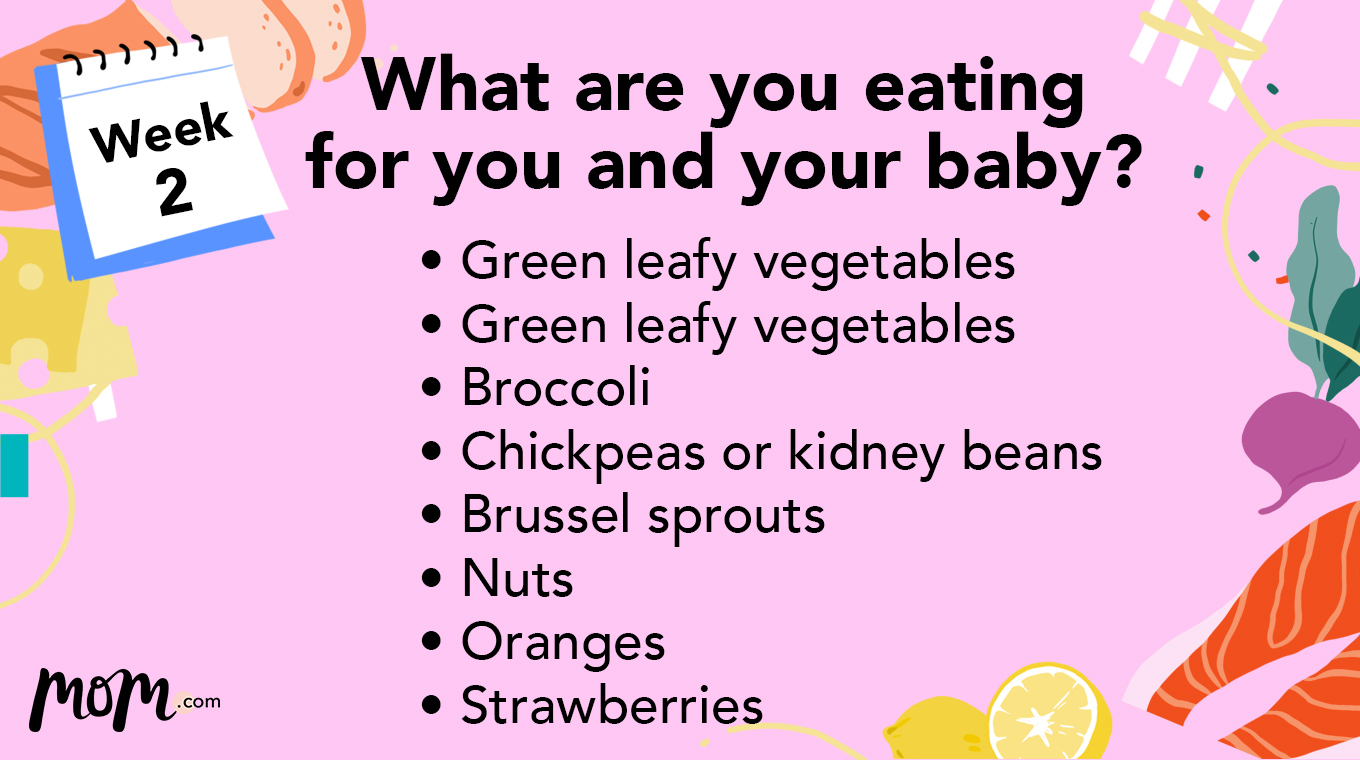
What are you eating for you and your baby?
As with last week, your body will need a continual source of vitamins and nutrients when you are growing a fetus. Ensure you eat healthily and add supplements for the nutrients you lack. If you haven’t started prenatal vitamins, now’s the time! There are now a lot more prenatal vitamins that don’t resemble horse pills and cause less stomach irritation, so ask your provider about your options.
Make sure you are taking folic acid, a B vitamin that is critical for healthy fetal central nervous system and brain development, as a supplement or through your food.
Some foods high in folic acid are:
- Green leafy vegetables
- Broccoli
- Chickpeas or kidney beans
- Brussel sprouts
- Nuts
- Oranges
- Strawberries
Since pregnancy hormones can really mess with your digestive system and cause constipation, you may also want to get into the habit of upping your fiber consumption.
Some foods high in fiber are:
- Fresh fruits
- Prunes
- Vegetables
- Lentils
- Bran cereals
When to call your doctor
Please call your doctor if you are bleeding from your vagina and concerned. While a third of pregnant women experience some bleeding during the first three months of pregnancy, half of the time there is no explanation and your pregnancy will proceed as normal. Some people also experience implantation bleeding. However, the other half of the time, the bleeding ends in miscarriage.
According to the Centers for Disease Control and Prevention (CDC), pregnant people are at a higher risk of severe illness from COVID-19 and death compared to non-pregnant people. Furthermore, pregnant women with COVID-19 are at increased risk of delivering a baby before 37 weeks (preterm birth) and other adverse ramifications.
Note: If you are visiting a medical professional during COVID, make sure to ask about the facility’s safety measures and confirm that they are following COVID protocols as indicated by the CDC.