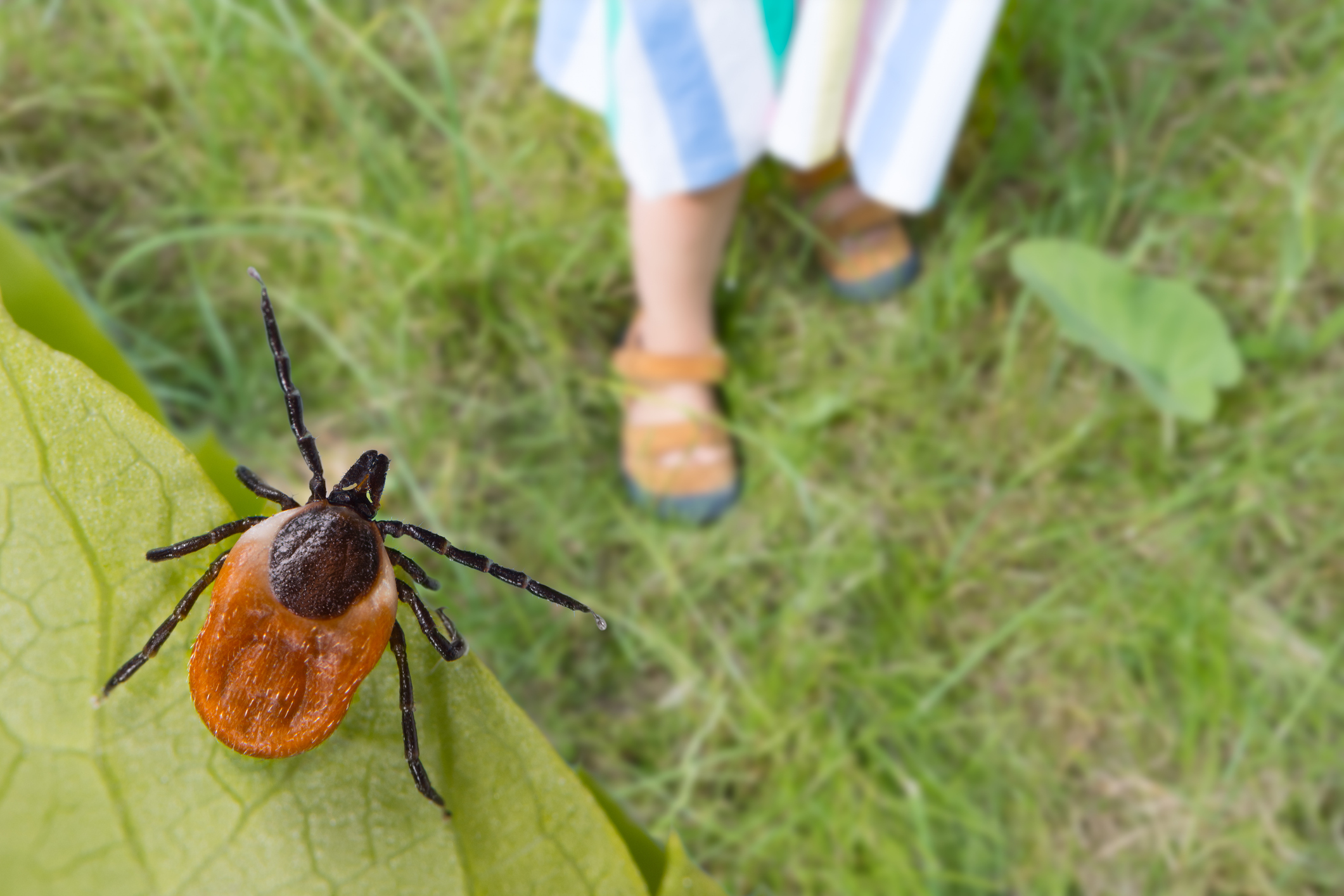
I live in the Midwest, so I have the great fortune of not being around sharks, rattlesnakes, or (most) large reptiles. Heck, I don’t even have to worry about salt water stinging a papercut.
But there is one thing that I fear here in our freshwater, open-air, and grassy-yet-foresty state: ticks.
Ticks are my ultimate nemesis, and I live in constant fear of finding one. We happen to live on nearly 80 acres of farmland, pasture, and woods, so you know those little buggers are just lurking everywhere, waiting for a fresh taste of our blood. And to my great horror, I recently learned that ticks can be fully infectious for Lyme disease when they are barely larger than the period at the end of this sentence. (Yes, really.)
Unfortunately for me, my greatest fears were realized when I found a tick on one of my children. Yes, I panicked, but we also got through the experience. Here’s what happened when I faced my fear, and what I learned in talking to experts about tick removal and prevention.
Step One: Do Not Panic
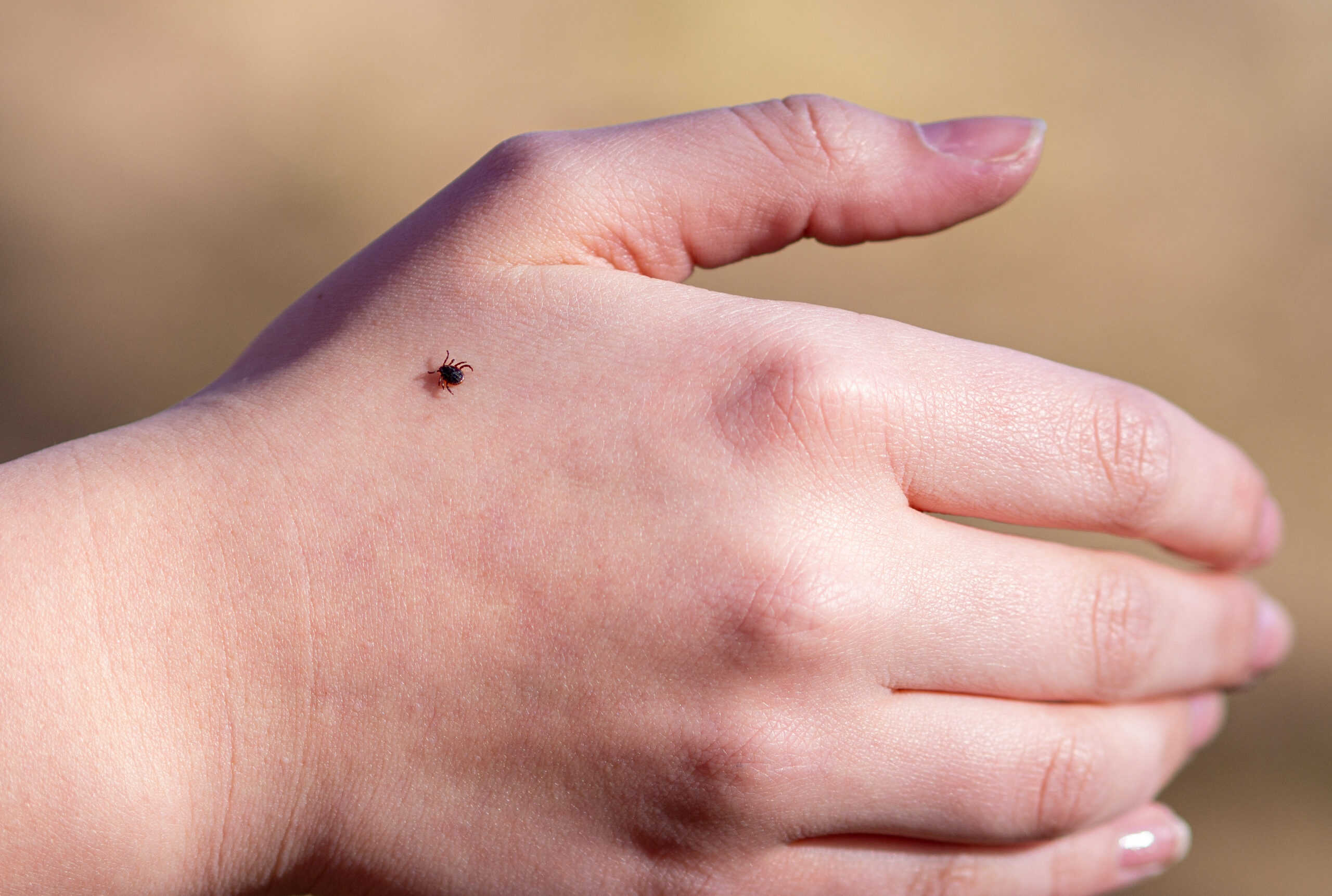
Obviously, this one is easier said than done, but here’s how I look at it: if you find the tick, it’s actually good news because you know what happened and can act accordingly. It’s really far more dangerous than not realizing you have been bitten by a tick and developing symptoms that may be more difficult to treat later on.
Bob Gilbert, MS, PHE, BCE, Board Certified Entomologist and Staff Entomologist at Blue Sky Pest Control, explains that ticks usually attach for some hours before feeding, so often there is time to find and remove them. If you catch them early enough, you may be able to remove the tick before it starts feeding.
To summarize, in my mind, finding a tick = the best possible outcome to a not-ideal situation overall.
Step Two: Remove the Tick
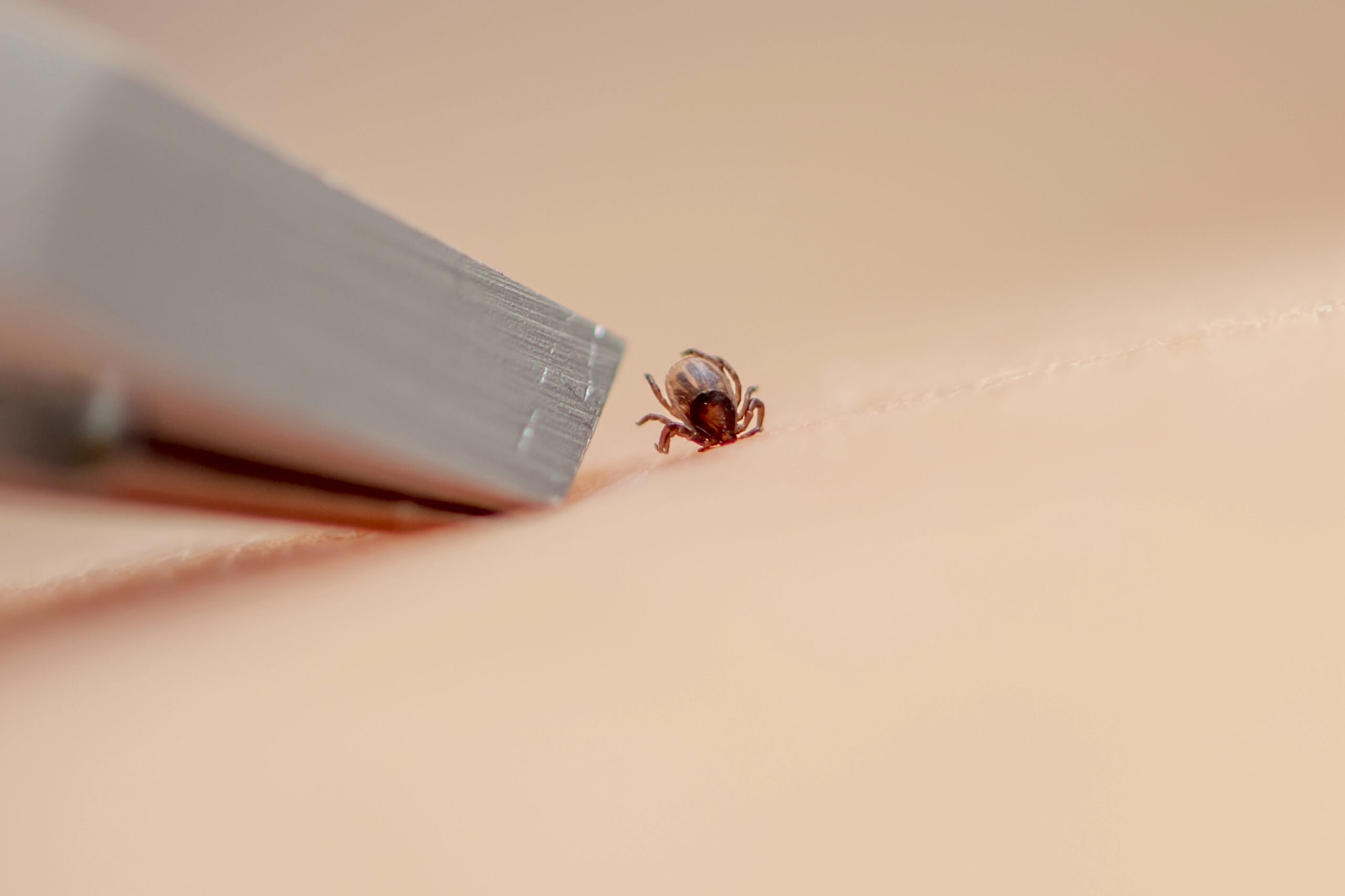
Here is where we get brave and face the tick head-on. The tick does need to be removed, but here is the part that surprised me: while the goal is to remove the entire tick, it is possible some of it will break off. The tick embeds itself in the skin via a feeding tube that it also “cements” into the skin (I know, so gross and creepy), so it is very plausible that a portion of the head will stay in the skin when you remove it. You can leave it there. Do not try to dig around it or break open the skin to remove what gets stuck.
You will want to avoid squeezing the tick’s body, as this can make removal more difficult and may force tick fluids back into the skin, explains Jessica Hochman, MD, Board-Certified Pediatrician with Oak Park Pediatrics in Los Angeles, and Host of the Your Child Is Normal podcast. “Do not twist the tick, since twisting can increase the risk of the mouthparts breaking off, and don’t use any other method, because they may actually stress the tick, causing it to release more saliva or stomach contents into the skin before it lets go,” she adds.
To remove a tick, follow these steps as explained by the Centers for Disease Control and Prevention (CDC):
- Use tweezers or special tick removers to pull the tick straight up. Flat tip tweezers work best if you have them.
- Try to grasp as much of the tick as you can and apply gentle but firm pressure upwards.
- “Do not twist or yank the tick,” says Gilbert. “Steady pressure is key.”
- “Do not remove any other way, as it could cause the tick to regurgitate into the bite, greatly increasing the chance of transmitting a disease pathogen into the child,” he adds.
- That means no “home” remedies, such as burning the tick with a match or using Vaseline to help wiggle it out.
- Clean the bite site with soap and water, then apply an antibiotic ointment.
Once the tick is removed, Gilbert advises keeping it in a small container with some rubbing alcohol to preserve it and scheduling an appointment ASAP with your child’s care provider. You can bring the tick with you, and they can test it or send it out for testing to see if it was carrying any disease-causing pathogens. The provider may also prescribe prophylactic (preventive) antibiotics while you wait for the results.
Step Three: Monitor Your Child
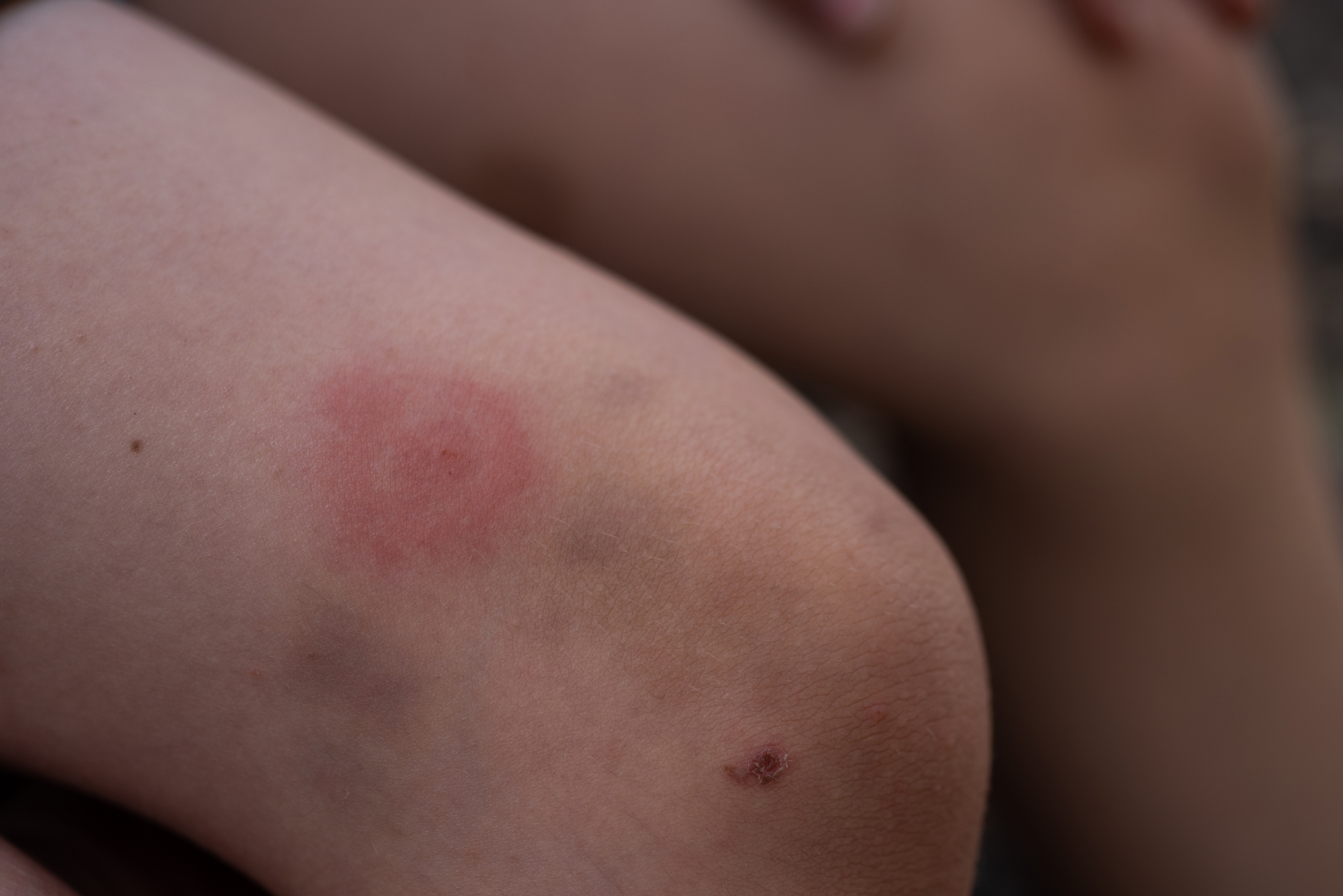
Even after you have removed the tick and taken your child to a doctor, the work is not over. You will need to continue to monitor your child for signs of a possible infection from the tick. The most telltale sign of an emerging Lyme infection is the bullseye rash. The rash can take weeks to develop, so you will want to watch the bite area closely.
Gilbert explains that the bullseye rash is usually composed of alternating rings of red rash and normal skin color. “Keep in mind that these rings may not be perfect, and only about half the people exposed to Lyme actually develop a bullseye rash,” he adds.
Dr. Hochman also provides the following clues that may signify a Lyme rash (also called “erythema migrans”) may be occurring:
- The rash is more than 2 inches (5 cm)
- The rash is expanding over several days (typical bite marks do not expand)
- It appears 3 to 30 days after the bite
- It looks uniformly red or sometimes shows central clearing that creates the classic bull’s-eye appearance
“The most important clue is not whether the rash looks like a bull’s-eye, but whether it continues to grow over time,” she notes. In addition to monitoring for an expanding rash, Dr. Hochman also recommends monitoring for fever, headache, fatigue, facial weakness, or flu-like symptoms after a tick bite. Contact your pediatrician if any symptoms occur.
Step Four: Continue Tick Patrol

Unfortunately, a tick bite does not protect you from future exposures or provide you with any immunity, so as a parent, you’ll need to continue rigorous monitoring for future ticks.
“A tick can bite anywhere,” notes Gilbert. He recommends that the areas to pay particular attention to are:
- Behind the ears
- At the hairline
- In the groin area
- In between the buttocks (as a mom of older kids and also for myself, I am truly wondering how to check for this, but I guess we just gotta get up in there)
- In and around the belly button
- Areas where tight clothes restrict the tick’s movement, such as at the waistline, tops of socks, and around bra lines or straps.
My husband also found a tick once embedded directly in his chest, so you just truly never know where they will end up. He had been carrying my daughter on his shoulders, so we suspect it came from her shoe.
Step Five: Prevention is Key

Along with monitoring for ticks, Gilbert says being aware of common tick “zones” can help.
“Ticks are more common at environmental transition sites such as field to woods, lawn to bushes, and similar areas,” he explains. Whenever possible, avoid those zones. It’s also helpful to apply FDA-approved tick repellants, such as 30% DEET, which has been shown to be very effective at repelling ticks and other blood-feeding arthropods such as mosquitoes.
Lastly, always do a tick check after spending time outside. “Make it a regular habit,” says Gilbert. Spotting ticks early is critical in preventing disease transmission. Young ticks can be very small, so be diligent! A hatchling tick can look like a small moving freckle, so a field loupe or good magnifying glass can be very helpful.”